
Travel Tips
Lorem ipsum dolor sit amet, consectetur adipiscing elit.

Search
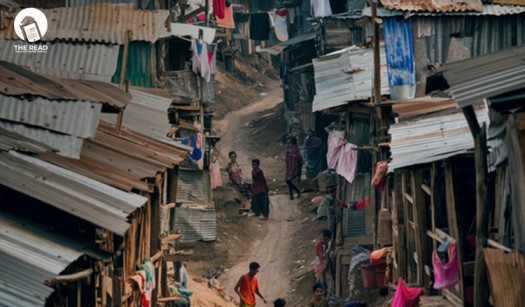
India’s rise as a global economic power stands alongside a deeply unequal social reality, where growth has not been shared equitably. This work examines how structural forces, particularly caste hierarchies and crony capitalism continue to shape and sustain inequality. By interrogating wealth concentration and policy frameworks, it seeks to uncover the deeper contradictions within India’s development narrative and the urgent need for a more inclusive path forward.
India is one of the most diverse and populous countries in the world. With over 1.4 billion people, it is the fourth-largest economy and is widely considered a military powerhouse in the world.
Despite this ambitious reputation across the world, the reality of the economic condition is marked by deep inequalities. Uneven access to education and healthcare, and prolonged social exclusion, are key reasons for this hindrance. According to the World Inequality Lab, India is the second most unequal country after South Africa, with 10% of the population controlling approximately 58% of the total national income. But even worse than in South Africa, 23% of the total national income is accrued to the richest 1%.
This data reflects the unequal growth of Indian society and policy shortcomings over the decades. A further investigation of more profound information would address a deep truth in relation to the economic reality of the country. This essay aims to understand how inequality persists in society and provide a detailed analysis of how the caste hierarchy continues to destabilize the economy. Additionally, it would see how institutionalized crony capitalism obliterates the lives of the poor by influencing government policies, redefining tax policies, and monopolizing the economy.
Wealth Inequality and Billionaire Raj
In the recent report of the Global Hunger Index (GHI), India ranked 102 out of 123 countries, surpassing neighboring countries like Sri Lanka, Bangladesh, and Pakistan, which maintained higher positions in the index.
In a country where the government boasts "Sabka Saath Sabka Vikas," these figures challenge the credibility of such claims. Beyond the hunger index, an analysis reflects the concerning economic reality of the people.
According to the World Inequality Lab, in India, 1% of the population holds approximately 40% of the total national wealth.
However, despite the persisting inequality, the number of billionaires in India is increasing rapidly. Between 2014 and 2026, the number has expanded roughly from 70 to 300 (Hurun Global Rich List 2026). This data highlights the concerning trend in the economic situation of the country, and some analysts view this as the rise of oligopoly.
More evidently, in India, the top 1% of the population shares approximately a quarter of the total national income. Shockingly, this dramatic rise in inequality has made the "Billionaire Raj," dominated by the modern Indian bourgeoisie, more unequal than the British Raj. Recorded at 13% in 1922, it hiked to 23% in 2022 (World Inequality Lab).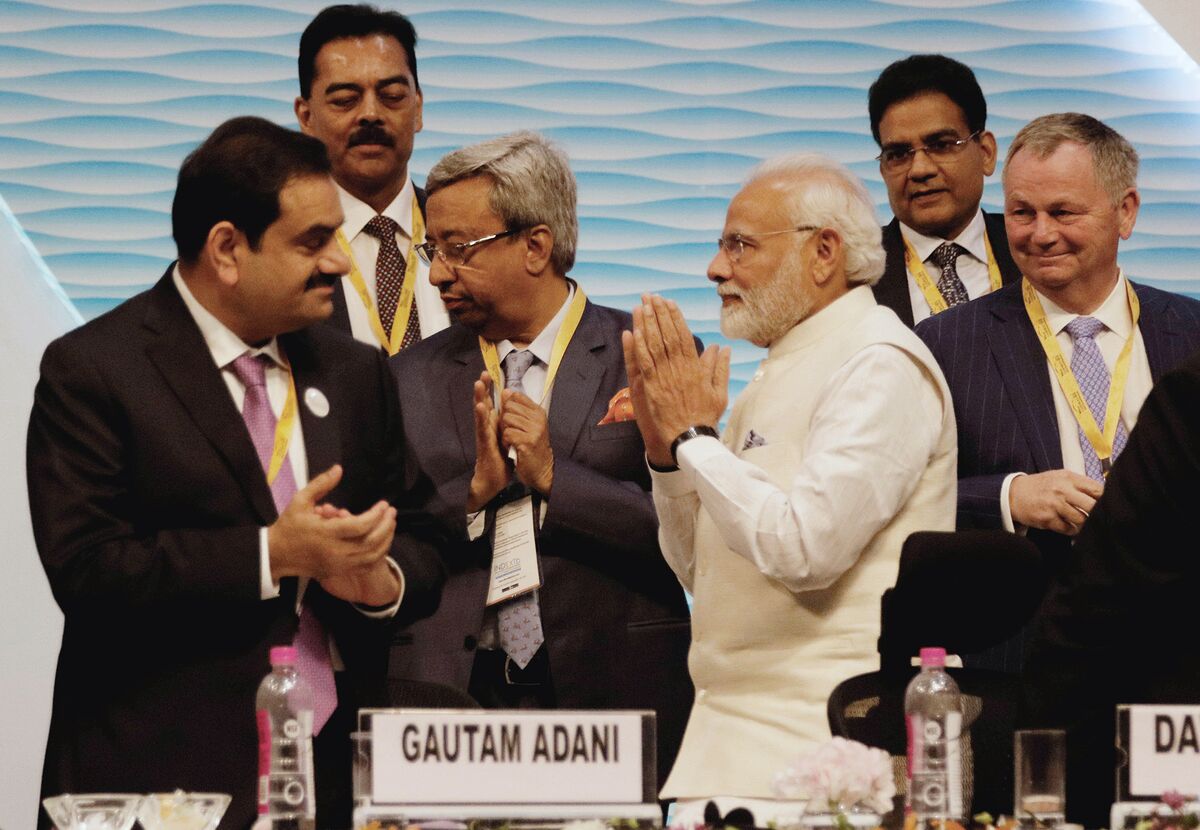
The shocking reality of the Indian economy is that the wealth inequality is higher than in the British period; it's a systematic failure. Besides this, a wider social inequality unfolds, fuelled by authorities and societal hegemony, revealing a more fractured reality of the country.
Wealth concentration and social inequality
The Indian society is an intricate tapestry of different cultures, beliefs, and languages. Unified into a single identity, "Indian," the constitution of India guarantees each citizen in the country equal political, economic, and social representation. Despite this, structural inequalities like caste discrimination continue to inflict deeply on the downtrodden.
Statistical analysis of the economic data reveals a nuanced reality of the hierarchical hegemony that prevails in the country. The report "Towards Tax Justice and Wealth Redistribution in India" shows that approximately 88% of the billionaires' wealth in India is concentrated in the hands of the upper caste. Scheduled Tribes (ST) are among the most marginalized communities that do not have any representation on the list. Beyond the billionaire's wealth, 55% of the national wealth is in the hands of the upper caste (AIDIS 2018-19). This obvious economic disparity is underpinning the stark contrast between the caste and hierarchical structures. Caste continues to influence access to education and growth, and limit people's opportunities.
However, in spite of the structural inequalities that prevail in the country, perceived tolerance of the ruling governments for crony capitalism is also one of the key drivers of economic inequality.
Crony Capitalism in Contemporary India
Crony capitalism is the concentration of wealth among a few business magnates due to their closeness with the state. In India, when the country embarked on the liberalization policy in 1991, the national wealth concentration of the top 1% was 16%. After three decades, it spiked to 40% as we mentioned earlier. Analysts view this profound inequality as due to the rise of crony capitalism.
But the last decade of the NDA regime has spurred the growth rate of crony capitalism. According to the crony capitalism index published by "The Economist" in 2023, India ranks 10th with a rise from a 5% to an 8% crony sector contribution to the GDP.
Studies suggest the alleged nexus between PM Modi and business conglomerate Mr. Adani as an example of crony capitalism in modern India. After the Gujarat riots in 2002, Mr. Narendra Modi, then chief minister of Gujarat, was widely criticized for his connivance in the violence, but a few industrialists like Adani founded a new organization, the Resurgent Group of Gujarat (RGG), to support him. In 2003, Adani attracted attention at the first Global Vibrant Gujarat Summit by promising Modi a 15 billion investment in the state. Critics point out that this synergy between them facilitated the expansion of Mundra port, now the largest private port in India. According to Forbes Asia, the organization that reviewed the original contracts stated that "Adani has leased the land from the government over the years for as little as one US cent per square meter." Critics argue this is the beginning of the alleged Modi-Adani axis, which continues to influence the developmental policies of the country.
Besides this, the government has been widely criticized for its excessively corporate-friendly policies. For example, in 2019, Union Finance Minister Nirmala Sitharaman introduced an ordinance for reducing corporate taxes. All domestic companies benefited from the tax reduction to 25%. In addition, the government has reduced the tax for new manufacturing companies to 17%. The exemption was estimated at 1.4 lakh crore in tax collection.
Moreover, crony capitalism has wider consequences in the politics of the country. The introduction of electoral bonds – an anonymous mechanism to get donations for political factions – has reduced transparency and allowed large firms to fund political parties without much scrutiny.
Nevertheless, whistleblowers argue that crony capitalism has bolstered the Indian economy by facilitating infrastructure development and attracting investments to large-scale projects, such as the rise of Bangalore and Hyderabad as international tech hubs, and developing a "knowledge economy" in these cities is often cited as evidence for this. However, this growth was uneven and undermined the social reality and deepened the persistent wealth inequality in the country.
Persistence of inequality in the country is not merely an economic concern, but it reflects the hierarchical structure that has shaped the social reality of India for centuries. While the liberalization has transformed India into a global player, it has undermined the existing inequality. While the growth contributed to the rise of the “billionaire raj” along with widespread inequality, it raises serious questions about the nature of development itself. However, a system that enables unprecedented wealth accumulation while excluding the growth of large sections lacks the structural stability to operate. The challenge before India is to address this inequality and restructure its progress. By redefining growth, India's development should depend on inclusivity and shared growth.




Comments