
Travel Tips
Lorem ipsum dolor sit amet, consectetur adipiscing elit.

Search
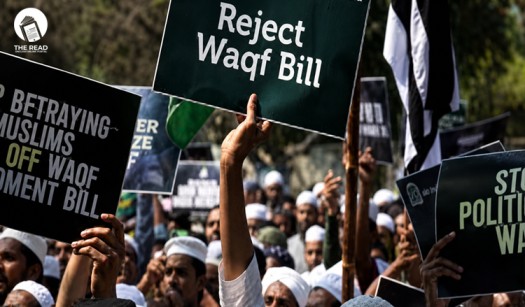
Malaysia and India are both diverse countries with significant Muslim populations, and both have waqf (Islamic endowment) practices. However, both countries' waqf systems differ due to variations in their governance, legal structures, and social organisation.
Malaysia and India are both diverse countries with significant Muslim populations, and both have waqf (Islamic endowment) practices. However, both countries' waqf systems differ due to variations in their governance, legal structures, and social organisation.
In Malaysia, waqf properties are highly organised and managed by the powerful government. where each state has a State Islamic Religious Council (SIRC), which controls and supervises waqf properties. Since Islam is the official religion of Malaysia, waqf administration is well integrated into its legal and political system. The Malaysian government plays a leading part in developing waqf land for education, healthcare, mosques, and commercial use. This structured system ensures better management, transparency, and economic use of waqf assets.
In contrast, waqf practices in India are more decentralised and not properly organised or maintained. India is a secular country, so the waqf can only be managed through Waqf Boards established under national law. These boards operate at the state level, but they often face challenges such as a lack of proper records, mismanagement, and legal disputes. Although India has a large number of waqf properties, which are very high in quantity, most of them are underutilised or poorly maintained.
In Malaysia, the waqf is utilized through different Jurisprudential practices, which we often study through our (Shafi'i) Islamic jurisprudence books (fiqh kitabs). Such as muḍārabah (profit-sharing partnerships) and muzāraʿah (sharecropping contracts) are examples of their approach to waqf.
Another key difference is in legal and administrative efficiency. Malaysia’s centralised approach to waqf allows for faster decision-making and better protection of waqf assets. In India, bureaucratic delays and weaker enforcement of laws slow down the development and reduce the effectiveness of waqf institutions.
The Socio-economic use of waqf also varies. In Malaysia, the income generated from waqf is utilised for communal development, which includes the development of schools, hospitals, and businesses. It contributes immensely to its GDP and public welfare. In India, waqf has great potential to support education and poverty reduction and other economic problems facing India in a much more optimized manner, but they are not being utilised sufficiently.
However, both countries recognise the importance of waqf as a highly effective tool for social welfare and religious charity. Efforts are being made in India to improve management and transparency, while Malaysia continues to strengthen its already organized system.
In conclusion, Malaysia’s waqf practices are well-maintained and contribute significantly to national wealth and welfare. But India’s waqf system faces challenges, but it holds potential that can be utilised more than in Malaysia. So the waqf system can be utilised for national economic development, like in Malaysia.




Comments