
Travel Tips
Lorem ipsum dolor sit amet, consectetur adipiscing elit.

Search
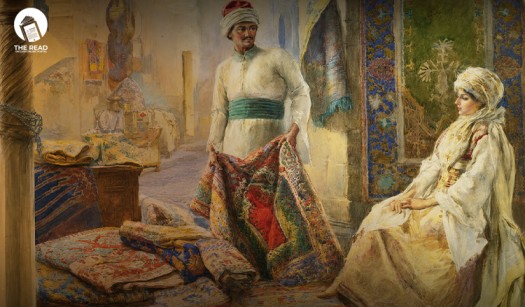
Islam and women’s empowerment are often misunderstood in modern society. The Qur’an and the teachings of Prophet Muhammad (pbuh) granted women rights in education, financial independence, and marriage centuries ago. Through figures like Aisha bint Abi Bakr and Khadija bint Khuwaylid, Islamic history shows that women played vital roles in scholarship, business, and society, reflecting Islam’s emphasis on dignity, justice, and mutual respect.
In today’s rapidly changing world, the discussion surrounding women’s status and empowerment in Islam has become one of the most debated and sensitive subjects. Across many societies, women continue to face challenges such as unequal opportunities, workplace discrimination, limited access to higher education, and social restrictions that hinder their personal and professional growth. In this context, Islam is often misunderstood, and the teachings of the Qur’an are frequently misrepresented. However, a closer understanding of the Qur’anic message and the teachings of Prophet Muhammad (pbuh) reveals that Islam introduced a revolutionary framework for women’s dignity, rights, and empowerment centuries ago.
The Qur’an established principles that ensured women’s rights in education, economic participation, and marriage at a time when women in many parts of the world were deprived of even the most basic human dignity. Islam did not view women as inferior beings; rather, it recognized them as essential members of society with spiritual, intellectual, and social responsibilities equal to those of men. The Qur’an repeatedly emphasizes justice, mutual respect, and moral equality between men and women, making empowerment an integral part of Islamic teachings.
One of the most important areas emphasized by Islam is education. Knowledge occupies a central position in Islamic civilization, and the pursuit of learning is considered an obligation upon every Muslim. The Qur’an declares in Surah Az-Zumar (39:9): “Say, are those who know equal to those who do not know?” This verse highlights the superiority of knowledge and encourages human beings to seek understanding and wisdom. Significantly, the verse does not limit this encouragement to men alone; rather, it addresses all believers. Education in Islam is therefore a universal right and responsibility shared equally by men and women.
The Prophet Muhammad (pbuh) further reinforced this principle when he stated: “Seeking knowledge is an obligation upon every Muslim.” Islamic scholars have long understood this teaching to include both men and women. Throughout Islamic history, women played remarkable roles in scholarship, literature, jurisprudence, and education. Among the greatest examples is Aisha bint Abi Bakr, the wife of the Prophet (pbuh), who became one of the most knowledgeable scholars of her era. She narrated thousands of hadiths, taught leading companions, and contributed significantly to Islamic jurisprudence, language, and poetry. Her intellectual contributions demonstrate that Islam not only permitted women’s education but also actively encouraged women to become scholars and teachers.
In addition to education, the Qur’an strongly supports women’s economic independence. Islam granted women financial rights long before such rights became recognized in many modern societies. Women in Islam have the right to own property, inherit wealth, conduct business, and earn independently. The Qur’an states in Surah An-Nisa (4:32): “For men is a share of what they have earned, and for women is a share of what they have earned.” This verse clearly acknowledges women’s right to work and benefit from their earnings. It also emphasizes fairness and discourages jealousy or discrimination between genders.
The economic empowerment of women can also be observed in early Islamic history. Before Islam, women in Arabia were often denied inheritance, forced into marriages, and deprived of financial autonomy. Islam abolished many of these oppressive customs and elevated the social and economic status of women. A powerful example is Khadija bint Khuwaylid, the first wife of Prophet Muhammad (pbuh). She was a respected and successful merchant in Makkah who managed trade caravans and employed men in her business. Her intelligence, leadership, and financial independence demonstrate that Islam recognizes and values women’s participation in economic life. Moreover, her support played a crucial role during the early stages of Islam, helping establish stability for the Muslim community.
Marriage is another area where the Qur’an emphasizes women’s dignity and rights. Contrary to common misconceptions, Islam does not support forced marriage or oppressive treatment within the family. Instead, the Qur’an describes marriage as a relationship built upon mercy, compassion, and mutual respect. In Surah An-Nisa (4:19), Allah commands believers to treat women kindly and prohibits injustice against them: “Live with them in kindness.” This verse establishes an ethical framework for marital relationships based on fairness and emotional respect. It also rejects harmful pre-Islamic practices that treated women as property rather than human beings.
Similarly, Surah Ar-Rum (30:21) beautifully describes the emotional and spiritual foundation of marriage: “And among His signs is that He created for you spouses from among yourselves so that you may find tranquility in them, and He placed between you affection and mercy.” This verse portrays marriage not as a relationship of domination, but as a partnership grounded in love, peace, and compassion. The Qur’anic understanding of marriage therefore promotes emotional well-being, cooperation, and mutual care between spouses.
The teachings of Prophet Muhammad (pbuh) further strengthened these values. He consistently emphasized kindness toward women and condemned injustice within families. One of his famous sayings states: “The best of you are those who are best to their wives.” In another narration, he encouraged simplicity and fairness in marriage, teaching that the most blessed marriages are those free from unnecessary burdens and extravagance. These teachings highlight Islam’s concern for women’s dignity, emotional security, and social respect.
Despite these clear teachings, contemporary controversies surrounding Islam and women often arise from cultural practices, social traditions, or misinterpretations of religious texts rather than the actual message of the Qur’an. In some societies, restrictions placed upon women are mistakenly presented as Islamic, even though they contradict the principles of justice and equality emphasized in the Qur’an. Therefore, it is important to distinguish between authentic Islamic teachings and cultural customs that developed over time.
The Qur’anic model of women’s empowerment is not based on conflict between genders but on cooperation, dignity, and social balance. Islam recognizes the unique capabilities and responsibilities of both men and women while affirming their equal spiritual worth before God. Women are given the right to education, ownership, employment, inheritance, and participation in social life. At the same time, Islam emphasizes moral values, family stability, and mutual responsibility as foundations of a healthy society.
In conclusion, Islam introduced a transformative vision for women’s empowerment through the divine guidance of the Qur’an and the teachings of the Prophet Muhammad (pbuh). Long before modern discussions on gender equality emerged, Islam established women’s rights in education, economic independence, and marriage. The Qur’an encouraged the pursuit of knowledge, recognized women’s financial autonomy, and promoted relationships built on compassion and justice. Historical examples such as Aisha bint Abi Bakr and Khadija bint Khuwaylid further demonstrate the active and influential role women held in Islamic civilization. Therefore, a proper understanding of the Qur’anic message reveals that Islam is not a barrier to women’s empowerment, but rather a faith that honors women’s dignity, intellect, and contribution to society.




Comments