
Travel Tips
Lorem ipsum dolor sit amet, consectetur adipiscing elit.

Search
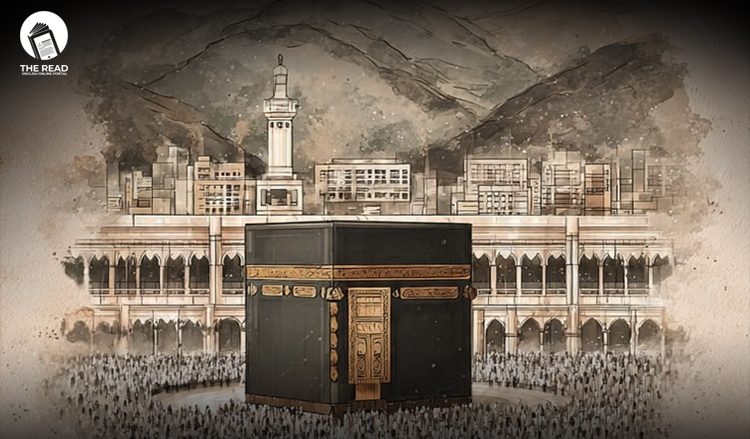
Hajj is a profound expression of faith and obedience to Allah, bringing millions of Muslims together in Mecca in a journey of worship, sacrifice, and spiritual purification. It embodies unity, humility, and remembrance of the Hereafter, renewing the believer’s connection with Allah and the global Muslim ummah.
The obligation of Hajj stands as a pivotal axis of Islam, embodying unity and humility beyond divergence of race, ethnicity, and social status while resounding with the echoes of takbir. Hajj eclipses the mere performance of ritual acts and serves as a sagacious manifestation of human submission to Allah. Through its rites, the pilgrimage germinates piety, moral discipline, humility, and communal solidarity, while simultaneously reminding believers of the transient nature of worldly existence and the ultimate reality of the hereafter. Every year, millions of Muslims journey to Mecca to fulfill this numinous onus ordained by Allah.
The Meaning and Significance of Hajj
The term Hajj linguistically denotes “intention”. In Islamic legal and theological terminology, it refers to the pilgrimage to Mecca performed during the month of Dhu al-Hijjah through a series of prescribed ordinances established by Islamic law. The performance of Hajj constitutes a stipulation incumbent once in a lifetime upon every Muslim possessing the requisite physical and financial capability. Al Lah states in the Qur’an:
“And proclaim to the people the Hajj; they will come to you on foot and on every lean camel; they will come from every distant pass.”
(Qur’an 22:27)
Hajj as a Manifestation of Submission
Throughout the pilgrimage, believers repeatedly recite the Talbiyah: “Labbayka Allahumma Labbay.k” This declaration represents an incisive proclamation of unwavering submission, obedience, and exclusive devotion to Allah. The essence of Ḥajj is rooted in ʿubudiyyah (servitude), wherein the believer responds to the divine command with humility and sincerity, transcending purely rational or utilitarian considerations.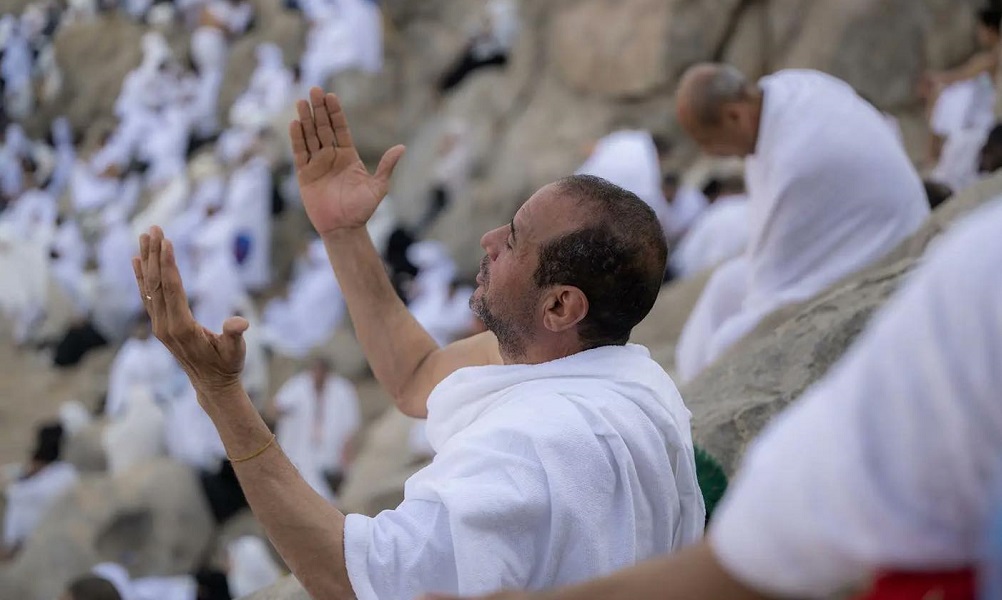
Those who question the centrality of Hajj within Islam must recognize that its foremost objective lies in unconditional obedience to Allah. The pilgrimage is not merely an act to be intellectually analyzed, but a sacred embodiment of submission to divine ordinance.
The Essential Integrals of Hajj
Hajj primarily consists of six essential integrals (arkan): entering the state of iḥram, standing at ʿArafat, performing Tawaf al-Ifadah, Saʿy between Safa and Marwah, removing or shortening the hair, and observing the prescribed sequence (tartib) of the rites.
A distinctive feature separating Hajj from other forms of worship is its strict spatial and ritual specificity. Unlike acts of devotion that may be performed universally, Hajj can only be validly undertaken within the sacred precincts of Mecca and through the fulfillment of its prescribed integrals and obligatory rites (wajibat). This exclusivity underscores the sanctity of the sacred geography established by divine command.
The Spiritual and Ethical Dimensions of Hajj
Hajj is not merely a configuration of ritual observances; rather, each rite depicts erudite spiritual and symbolic significance. Upon entering the state of ihram and donning simple white garments, bifurcating from wealth, ethnicity, nationality, and social hierarchy are effectively dissolved. Rulers and laborers alike stand in a single rank, synthesizing the fundamental equality of humanity before Allah.
The pilgrimage incubates humility, perseverance, discipline, and self-restraint. Pilgrims are instructed to refrain from disputation, sinful discourse, and harmful conduct, thereby transforming Hajj into an omnibus arena for ethical and spiritual refinement. The rites of Hajj further portray deeper semiotic realities: The saʿy between Safa and Marwah signifies reliance upon Allah amidst hardship and uncertainty. The stoning of the pillars at Mina symbolizes the rejection of evil and worldly temptation. The sacrificial offering commemorates the unwavering obedience of Prophet Ibrahim. The shaving of the head signifies purification, renewal, and spiritual rebirth.
Arafah and the Consciousness of the Hereafter
Among the most spiritually profound moments of Hajj is the gathering at the plain of ʿArafah, where millions assemble in supplication, repentance, and devotion. This gathering evokes a powerful resemblance to the Day of Resurrection, reminding believers of ultimate accountability before Allah. The Prophet Muhammad emphasized the centrality of this rite when he declared: “Hajj is ʿArafah.”
The standing at ʿArafah represents the spiritual climax of the pilgrimage, wherein believers collectively experience humility, repentance, and consciousness of the Hereafter.
Historical Continuity and Sacred Legacy
Islamic historical and exegetical traditions accentuate the antiquity and sanctity of the pilgrimage. Certain narrations report that Prophet Adam performed Hajj multiple times. Early Muslim historians such as Ibn Ishaq further relate that the tradition of pilgrimage continued among the descendants of Prophet Ibrahim and was never entirely abandoned.
According to the dominant scholarly position, the obligation of Hajj was formally legislated in the sixth year after the Hijrah, thereby institutionalizing one of the foundational pillars of Islam. Historically, Hajj also functioned as a significant center of intellectual and cultural transmission. Pilgrims facilitated the circulation of knowledge, scholarly traditions, and cultural practices across diverse regions of the Muslim world, reinforcing the cohesion and interconnectedness of the global Muslim community (ummah).
The Sanctity of the Kaʿbah
The sacredness of the Kaʿbah is vividly illustrated through the account of Abraha, who sought to divert the pilgrimage away from Mecca and undermine the religious centrality of the Sacred House. Motivated by political and religious ambition, he advanced with an army that included elephants, intending to destroy the Kaʿbah and redirect Arabian devotion toward Yemen.
The Qur’an recounts that Allah miraculously thwarted this expedition through flocks of birds (ababil), thereby preserving the sanctity of the Kaʿbah and affirming its divinely protected status. This episode remains a powerful testimony to the enduring sacredness of the House of Allah and the centrality of Hajj within Islamic tradition.
Preparation for the Sacred Journey
Classical Islamic scholarship emphasizes the ethical and spiritual preparedness required before undertaking the pilgrimage. Pilgrims are encouraged to settle outstanding debts, restore the rights of others, seek reconciliation with those whom they may have wronged, and purify both their material and spiritual affairs before embarking upon the sacred journey.
Such preparation reflects the broader objective of approaching Hajj with sincerity, moral integrity, and inward purification.
The Prophet Muhammad stated that whoever performs Hajj sincerely while refraining from sinful conduct returns purified from sin like a newborn child. Consequently, Hajj is frequently characterized within the Islamic tradition as a profound journey of spiritual purification and existential renewal.Hajj therefore remains not merely a ritual obligation, but a transformative experience that reorients the believer toward devotion, moral consciousness, and eternal accountability before Allah.
Hajj represents one of the most comprehensive manifestations of Islamic spirituality, integrating submission, sacrifice, discipline, equality, and remembrance of the Hereafter into a single sacred journey. Through its rites and symbolism, the pilgrimage continually renews the believer’s relationship with Allah while strengthening the unity and consciousness of the Muslim ummah across boundaries of language, ethnicity, and geography.
May Allah grant all believers the honor and ability to perform Hajj at least once in their lifetime.




Comments