
Travel Tips
Lorem ipsum dolor sit amet, consectetur adipiscing elit.

Search
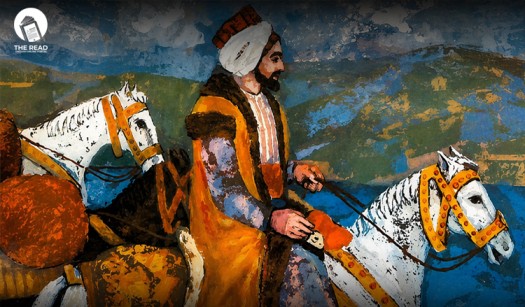
Sheikh Abdul Qadir Sani (R) remains one of the most influential spiritual figures in the history of Malabar. His life was marked by miracles, deep devotion, and the spread of the Suhrawardi spiritual tradition in Puratheel. Over the centuries, Puratheel earned the title “Baghdad of India” through its rich heritage of worship and learning.
Sheikh Abdul Qadir Sani (R) and the Spiritual Heritage of Puratheel
In the spiritual annals of Malabar, few stories are as evocative as the life of Sheikh Muhyidheen Abdul Qadir Sani (R). His journey, which transformed the village of Puratheel into the "Baghdad of India," is a tapestry woven with divine prophecies, royal patronage, and awe-inspiring miracles, all of which continue to be whispered by the faithful today.
The Vision and the Royal Ward
The story begins with a divine promise. His father, the Suć master Sheikh Uthman, arrived in Kerala from Afghanistan following a vision that he would father a miraculous child. This prophecy was mirrored in the halls of the Chirakkal Kingdom, where royal astrologers warned the King of a child born in Balafathan (Valapattanam), destined for spiritual greatness.
Recognizing the child’s extraordinary potential, the King took the young Abdul Qadir under his wing. Between the ages of five and six, the boy lived within the palace, surrounded by royal grandeur yet destined for a path far removed from worldly power.
The Miracle of the Four Strangers
Four strangers, appearing as travel-worn and hungry paupers, arrived at his family's home. Seeking food, they were met by Abdul Qadir’s distressed mother; the only resources she had were a cow and a jackfruit tree strictly reserved for her son's needs.
Undeterred by the mother’s concerns, the strangers performed a series of miraculous acts that defied the laws of nature and established the spiritual authority of the Suhrawardi path in the region. In an act of startling boldness, the strangers slaughtered the family's only cow. This was not an act of destruction but a sacred preparation to provide meat for a meal that would carry a divine blessing. To cook the meat, the strangers required wood. They proceeded to chop down the prized jackfruit tree in front of the house, using its wood as fuel. To the mother, it appeared that the family’s most vital resources were being consumed and destroyed.
After preparing the meal and eating their fill, the strangers did not simply leave. They instructed the mother to save the remaining food and give it to Abdul Qadir upon his return, signaling that the entire episode was a spiritual trial and a gift intended for the future saint.
When the strangers departed, a double miracle unfolded: the mother looked outside to find the cow alive and well and the jackfruit tree standing tall in its original place, as if never touched by an axe. Realizing these were no ordinary men, Abdul Qadir set out to find them, eventually receiving his spiritual initiation into the Suhrawardi tariqah order from the great master Mahmoud Al Khabooshani.
The Sacred Seclusion of Puratheel
Inspired by this encounter, the Sheikh renounced his princely life. He requested the King for a place of seclusion, which the King granted and named "Puratheel." It was here that he established a mosque and a culture of deep spiritual devotion. His resemblance in character and spiritual power to the great Ghaus al-Azam earned him the title "Al-Thani" (The Second). What distinguishes Puratheel today are the rituals (Auwrad and Wala'ef) that have remained unchanged since the Sheikh’s era. The village operates on a spiritual clock that dictates the fast-paced modern world:
The Dhikr Halaqa: Every Thursday, Friday, and Monday night after the Maghrib prayer, the community gathers for a rhythmic circle of remembrance. The air vibrates with the chanting of Divine names, creating a meditative atmosphere that has persisted for generations.
Ramadan Vigils: While the rest of the world sleeps, Puratheel glows with the soft light of lanterns. Worshippers perform intensive prayers from midnight until dawn, culminating in the "Night of Power" (Lailat al-Qadr), where the Adhan (call to prayer) resounds seven times to herald the night’s arrival.
The Living Link: Every Friday, the descendants of the Sheikh lead the prayers and a ritual of repentance. This maintains a direct Silsila (chain of transmission) that dates back to the Suhrawardi masters, providing the faithful with a living connection to the saint.
The small, historic mosque that stands there today is the very foundation of the settlement. When the King of Chirakkal granted this territory to the Sheikh for his spiritual retreat, the Sheikh prioritized the construction of this house of worship. Visitors to the shrine today often perform Ziyarat (visitation) not only for the Sheikh but also for these 40 souls, acknowledging that the spiritual power of Puratheel is sustained by the collective devotion of this “Circle of Saints."
The Miracle of the Dry Turban
According to historical accounts and the reports of his disciples, the Sheikh was once traveling to Kannur by boat. In the middle of the journey, disaster struck—the vessel cracked and began to sink. As the waters rushed in, the passengers were forced to jump into the sea and swim for their lives toward the shore.
In the chaos of the shipwreck, the Sheikh went missing. His followers reached the land safely, but their hearts were filled with grief, fearing that their beloved master had been lost to the depths of the ocean.
However, their sorrow was short-lived. A short while later, the Sheikh miraculously appeared on the shore. To the astonishment of those present, he stood before them holding his walking stick and wearing his turban, yet not a single drop of water had touched him. Despite emerging from a shipwreck, his clothes and turban were perfectly dry.
When his bewildered followers asked how he had survived such a calamity unscathed, the Sheikh did not speak of his own safety. Instead, he revealed a deeper spiritual truth. He informed them that at that very moment, his great master, Sheikh Mahmoud Al-Khabooshani, had passed away.
This miracle served a dual purpose: it demonstrated the Sheikh’s "Karamat" (divine grace) over the elements of nature and highlighted the "Rabita" (spiritual bond) between a disciple and his mentor. Subsequent news from the North confirmed that the master had indeed departed the world at the exact moment of the shipwreck, proving the Sheikh's spiritual vision.
The Presence of a Qutb: The Spiritual Encounter in Mecca
The life of Sheikh Muhyidheen Abdul Qadir Sani (R) is rich in accounts of Tayy al-Makan (the folding of space), in which his spiritual presence was felt across vast distances. One of the most famous stories illustrating his high spiritual rank involves his contemporary, the great scholar and saint Sheikh Muhammad al-Bakri (R) of Egypt, a figure of immense renown in the Islamic world.
The story begins in Malabar when a devoted disciple (mureed) named Hasan ibn Muhammad sought permission from Sheikh Abdul Qadir Sani to embark on the Hajj pilgrimage. Upon granting permission, the Sheikh gave Hasan a specific task:
"When you reach the holy lands, find the Great Imam, Muhammad al-Bakri, and convey my Salam (greetings) to him." When Hasan arrived in Mecca, he searched for the Imam and eventually found him at his residence. Muhammad al-Bakri was a figure of great gravity, surrounded by a large gathering of scholars and students. Hasan approached and announced, "My master, Abdul Qadir al-Thani of Malabar, sends you his greetings of peace."
To Hasan’s confusion and slight disappointment, the Imam did not respond immediately. Instead, he turned to his companions and asked, "Did you hear that greeting? Do you know of this Abdul Qadir al-Thani?" They replied that they did not. Suddenly, the atmosphere in the room changed. Imam Muhammad al-Bakri sat back, then lowered his head in deep meditation. A moment later, he raised his head with an expression of profound respect, as if someone of great importance had just entered the room. He stood or adjusted his posture and replied, "Wa Alaikum Assalam," repeating it three times with great fervor. The Imam then turned to the astonished Hasan and revealed the truth of what had just occurred:
"Your Sheikh is not an ordinary man; he is one of the Qutbs (Spiritual Pivots) of this world. Even as you spoke, he presented himself here spiritually. He came to me and gave me his salaam in person, and I returned it to him. " Imam al-Bakri then entrusted Hasan with a return greeting for his master. When Hasan finally completed his pilgrimage and returned to Kerala, he found Sheikh Abdul Qadir Sani in Balafathan (Valapattanam).
Before Hasan could even speak or narrate his journey, the Sheikh smiled and began to describe the exact scene that had taken place in Mecca. He recounted the gathering of scholars, the Imam’s initial silence, and the moment they exchanged greetings in the spiritual realm. Hasan was struck with wonder, realizing that while his master’s body had remained in Malabar, his spirit had travelled thousands of miles to stand in the presence of the Great Imam.
The Pillar of Light: A Vision in the Night
One of the most striking accounts from the Sheikh’s life involves a disciple who was accompanying him at the mosque in Puratheel. According to the tradition, the Sheikh withdrew to an empty, secluded area of the mosque to engage in solitary prayer. The disciple, sitting nearby to keep watch, found himself in a state between sleep and wakefulness—a "liminal" state often associated with spiritual visions. When he fully jolted awake, he found himself, perhaps miraculously, outside the mosque.
Looking back toward the building, he witnessed an awe-inspiring sight:
A brilliant, celestial light was rising from the very spot where the Sheikh was praying, piercing through the roof of the mosque and extending all the way into the heights of the sky. As the disciple stood transfixed by this divine light, the Sheikh finished his prayers and emerged from the secluded area. He approached the disciple and asked a single, piercing question: "Did you see anything?"
The disciple, still trembling from the vision, replied, "Yes, Master." At this, the Sheikh gave a stern but gentle instruction: "Do not ask anything about that light, and do not speak of it."
The Final Transition
After a long life dedicated to the guidance of the soul and the establishment of sacred traditions that have lasted over four centuries, Sheikh Abdul Qadir Sani (R) passed away. His departure occurred on a Friday, the 16th of Dhu al-Qi'dah, in the year 983 AH.
Today, his mausoleum in Puratheel remains a radiant sanctuary. Draped in royal green, he rests surrounded by his family and companions, attracting seekers who look past the digital world to find peace, which is both ancient and evergreen. The physical environment of Puratheel is a map of the Sheikh’s spiritual hierarchy. The original mosque he built still stands, a sanctuary where he engaged in deep vigils. It was here that a disciple once witnessed a Pillar of Light rising from the Sheikh’s place of prayer to the heavens—a sign of his status as a Qutb (Spiritual Pivot).
Surrounding the Maqam Shareef (the noble tomb) is a silent guard of honor: the graves of forty Mureeds (disciples). These men were the original carriers of his teachings, who stayed by his side in life and chose to rest near him in death. For the pilgrim, walking among these forty graves is a reminder that the path of the soul is a collective journey of love and discipline.
The spiritual lineage of Puratheel found one of its most profound contemporary guardians in the late Shykhuna Maniyoor Ahmed Musliyar, who served as the esteemed Shaykh and spiritual guide of the sanctuary. A scholar of immense depth and a pillar of the community, he was instrumental in preserving the 450-year-old traditions of the Suhrawardi path that defines the "Baghdad of India." Under his leadership, the sacred rituals—from the nightly Dhikr Halaqas to the meticulous conduct of the annual Urus—were maintained with unwavering authenticity. He was not merely a formal head of the institution but a living bridge to the legacy of Sheikh Muhyidheen Abdul Qadir Sani (R), embodying the same humility and spiritual gravity that the sanctuary has represented since its inception. His passing marked the end of an era, yet the educational and spiritual frameworks he fortified continue to provide light and direction for the thousands of devotees who flock to Puratheel today.
The impact of Sheikh Abdul Qadir Sani’s legacy is found in the tranquility of the river at Varam Kadavu and the whispered prayers of the faithful in the small mosque. Puratheel reminds us that true influence is not measured by fame or media presence but by the ability to claim a place in "living hearts and memories." As the 464th Urus approaches, the light that once rose from the mosque to the sky continues to guide the souls of Malabar, proving that the sacred island of Puratheel remains a timeless beacon of the Divine.




Comments