
Travel Tips
Lorem ipsum dolor sit amet, consectetur adipiscing elit.

Search
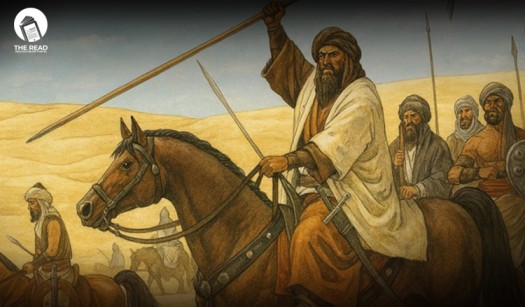
The Battle of Krasos was fought in August 804 AD between the forces of the Abbasid Caliphate, led by Ibrahim ibn Jibril, and the Byzantine Empire under Emperor Nikephoros I. Following the breakdown of a peace agreement and the refusal of Nikephoros to continue tribute payments to Caliph Harun al-Rashid, tensions escalated into renewed warfare.
During the Abbasid Caliphate, the Battle of Krasos was fought in August AD
804 between the Arab forces and the Byzantine Empire. The Muslim army, led
by Ibrahim ibn Jibril, clashed with the Byzantine forces under the Emperor
Nikephoros I.
Background
The deposition of Byzantine Empress Irene in AD 802 and the subsequent
The ascension of Nikephoros I marked the beginning of a violent chapter in Arab-
Byzantine military history. Previously, due to the devastating impact of the
annual raids conducted by the Abbasid Caliphate, Empress Irene had agreed to a
temporary truce with Caliph Harun al-Rashid, promising to pay the annual tribute in
exchange for peace.
However, Nikephoros was a military-minded ruler. He discontinued the tribute
payments to replenish the imperial treasury and assert the
empire’s dominance. Upon learning this, Caliph Harun al-Rashid dispatched a
lightning raid under his son, al-Qasim.
Despite facing the Abbasid expedition, Nikephoros refused to cooperate or
come to terms. Even after his commander Bardanes's Asian forces under
Staurakios suffered a complete defeat, and Nikephoros remained defiant.
After Bardanes was removed from command, Nikephoros restructured his
forces and prepared for another confrontation. Harun al-Rashid again sent his
forces to the region. Though both sides encamped in central Asia Minor after a
series of border raids, full-scale war did not immediately erupt. Instead, a
correspondence ensued between Harun and Nikephoros, culminating in a truce
wherein Nikephoros agreed to resume tribute payments for that year, and both
armies withdrew.
In the following year, Harun al-Rashid sent another raid led by Ibrahim ibn
Jibril. Entering Asia Minor through the Cilician Gates, the Abbasid army
carried out a rapid and unchallenged expedition. Meanwhile, Nikephoros too
mobilized his army to confront the Arabs. However, due to unforeseen
circumstances, he was forced to retreat.
Learning of this unfortunate development, the Muslim army intercepted the
Byzantines at Krasos during their return journey. In this completely unexpected
strike, the Byzantine army was soundly defeated. The battle inflicted severe
losses on the Byzantines. Emperor Nikephoros himself was wounded more than three
times and narrowly escaped death, thanks only to the bravery of his soldiers.
This decisive and dazzling victory added another glorious chapter to the
military accomplishments of the Abbasid Caliphate.




Comments