
Travel Tips
Lorem ipsum dolor sit amet, consectetur adipiscing elit.
Search
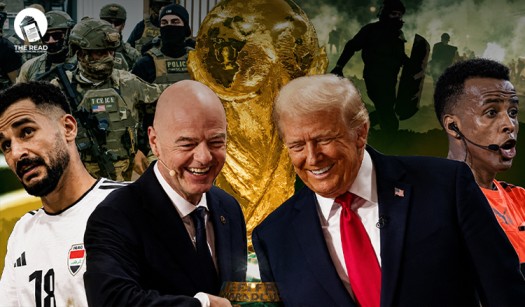
The FIFA World Cup 2026 may be remembered as one of the most politically charged tournaments in FIFA's history. From the influence within the game to the problems outside, the World Cup, jointly held in the USA, Mexico, and Canada, was a backlash against the tournament's beauty. The stage to unite the world's countries was the stage of drama, especially for the American government.
In the months leading up to the tournament, each host nation faced significant political and security challenges. The United States was engaged in a tense military confrontation with Iran, a conflict that had direct consequences for Iranian participation in the tournament. The conflict was the main cause for the discomfort of the Iranian national football team to stay away from the tournament. At this time, Mexico was in a security crisis with drug cartels, especially with “El Mencho” or Nemesio Rubén Oseguera Cervantes, who is currently the most wanted drug lord in the USA and Mexico. In Canada, there was a major public backlash over soaring public investments and disruptions in Toronto and Vancouver, both World Cup hosting cities.
Just days before the World Cup, a Somali referee named Omar Abdulkadir Artan was set to be the first Somali referee to control the World Cup. Still, he was sent back since the US authorities reportedly denied him entry over alleged security concerns, which he denied, even after being interrogated for more than 11 hours. Among the teams, Iran was one of the most affected by the political tensions, and its staff faced severe logistical hurdles and visa restrictions. So the base camp of the team was changed from Arizona in the USA to Tijuana in Mexico. For matches held in the United States, the Iranian squad traveled only a day before kickoff because of visa restrictions. As a message to the US government, the Iranian national team wore a suit with the number 168 pinned, which commemorates the 168 victims of the US attack on an elementary school in Iran. Also, the Iranian midfielder Mohammed Mohebi celebrated a goal in tribute to the victims, which was held in Los Angeles and sparked many controversies.
During the round of 32 match on July 1, 2026, between the USA and Bosnia and Herzegovina, the American forward Folarin Balogun was shown a straight red card after the formal VAR check by the Brazilian referee, but for the round of 16 match,The red card was later suspended for one year following alleged political intervention of the American president, Donald J. Trump, which allowed him to play the round of 16 match against Belgium. This incident was a major controversy in the World Cup, explicit evidence of dirty political interference on the pitch.
Football has long been celebrated as a language that transcends borders, cultures, and ideologies. Yet the 2026 FIFA World Cup demonstrated that even the world's most beloved sporting event cannot remain untouched by international politics. While fans will remember the goals, celebrations, and unforgettable matches, history may also remember this tournament as one where diplomacy, conflict, and geopolitics repeatedly stepped onto the pitch alongside the players.




Comments