
Travel Tips
Lorem ipsum dolor sit amet, consectetur adipiscing elit.

Search
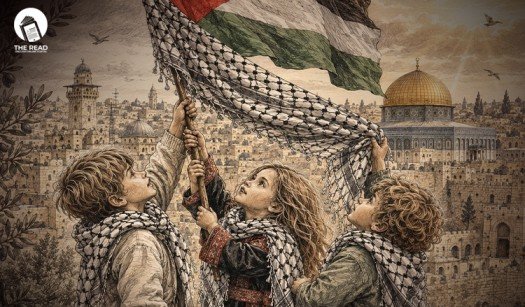
This feature examines the intersection of Zionism, religious ideology, settler colonialism, and security politics in shaping Israel’s territorial ambitions. From the Nakba and the 1967 occupation to contemporary rhetoric surrounding “Greater Israel” and the Messianic Era, it explores how theological narratives have influenced political discourse and territorial policies. The article also examines the role of far-right Israeli movements, religious nationalism, and international allies in shaping the ongoing conflict and its wider implications for peace and regional stability.
The combination of security concerns, nationalist strategy, and religious doctrines has always shaped Israel's territorial politics. Critics like Abdul Wahab Elmissiri, Patrick Wolfe, and contemporary human rights organisations argue that Israel has mobilised religious doctrines to validate the displacement of the Palestinian population. The expulsion in 1948 (Nakba), which resulted in the expulsion of 700,000 Palestinians from their homeland, and the Six-Day War in 1967, which almost tripled Israel's land possessions, illustrate how security concerns and religious doctrines together provide a foundation for Israel's expansion. Therefore, to understand Israel's politics, it is important to look at how theological ideas, settler-colonial practices, and security characterisations have intersected throughout the country’s history.
Zionism lies at the fundamental position of this convergence, which blended religious narratives and imperialist ambitions. As Abdul Wahab Elmessiri, a prominent Egyptian scholar, notes in his monumental works, like the "Encyclopaedia of Jews, Judaism, and Zionism", Israel is a colonial state which utilises the religious and historical narratives to justify its imperial expansion in the Middle East. For Elmessiri, the Nakba of 1948 and Israeli occupation aren't incidental but central to the movement for the Zionist projects.
This analysis adheres to the concept of "settler colonialism" as theorised by Patrick Wolfe. In this, the indigenous population is forcibly displaced or eliminated to make way for a new settler society. Reports by human rights organisations such as Amnesty International and B'Tselem also suggest the development of this pattern has contributed to the rise of institutionalised domination and segregation over the Palestinian population, restricting Palestinian settlements while encouraging Jewish immigration in the territory.
What makes Israel different is that discrimination is not just a policy outcome but a deliberate attempt, often reinforced by religious doctrines.
In the contemporary world, a state built on domination and discrimination rather than diplomatic discourse is incompatible with international norms. However, for Israel, a state established on the foundation of Zionism, discrimination is the ideology, and politics is a manifestation of that ideology. This has been meticulously captured in every action and confirmed repeatedly by Israel’s own leaders. For instance, human rights watchdogs like B'tselem observe Israel’s continued view of the Palestinian population as other people, which was reinforced by biblical narratives.
On 23 October 2023, Prime Minister Benjamin Netanyahu described Hamas as an enemy of incomparable cruelty. He then invoked the biblical verse: “You must remember what Amalek has done to you. The comparison of Hamas with a people the Bible commands to annihilate ignited a serious debate on the politics and religious rhetoric of Israel. In addition to this, Mr. Netanyahu is committed to the realisation of his vision of a greater Israel; in an interview on August 12, 2025, with Sharon Gal for i24 News, he said that he feels he is on a “historic and spiritual mission" and that he is “very” attached to the vision of the Promised Land and Greater Israel.
These remarks on Greater Israel indicate a meaningful shift from framing territorial expansions in terms of security concerns to explicitly justifying them in ideological and divine terms. To understand what “Greater Israel” means and why it matters, we must examine where the concept comes from.
Political leverage of Greater Israel
The concept of Eretz Yisrael is a sacred geography that has deep historical, religious, and political weight. Historically, the idea draws from the biblical promise of the "Nile to the Euphrates", which encompasses modern Palestine, Lebanon, Syria, and some parts of Egypt. The idea was elevated in political form amid Zionist movements of the twentieth century.
Far-right Zionists, like Zeev Jabotinsky, the founder of revisionist Zionism and an ideological contributor of the Likud party, advocated for a Jewish state on both banks of the Jordan River. Organisations like "Gush Emunim" encouraged Jewish settlements in these conquered territories, viewing the population of these lands not as a nationalist duty but as a religious obligation to fulfil biblical prophecy.
However, “Greater Israel” does not appear in Israeli state policy, nor does it ever officially claim the territory expansion as a right. Rather, it maintains the narrative of security reasons.
Yet, ironically, sitting members of the current government—finance minister Bezalel Smotrich and national security minister Itamar Ben-Gvir—are openly associated with the rhetoric of “Greater Israel". This gap between official stance and ministerial interests is deeply alarming and reveals the concept’s persistent influence on Israeli politics.
The development of this idea explains a wide theological framework, the belief that territorial expansion (Greater Israel) is not a mere strategic ambition but a divinely mandated step toward
the Messianic Era. Together, they provide a religious and ontological framework for understanding the present conflicts in the Middle East.
Jewish Eschatology and Messianic Era
The eschatology of Judaism (a theological branch concerned with the end times) has ancient roots. But in contemporary Israel, religious Zionists have politicised this and often linked it to the existence of Israel.
Jewish philosopher and historian Gershom Scholem notes that Zionism at first normalised Jewish existence, transforming a religious longing into a political project. Over time, however, for many Zionists, the establishment of Israel and subsequent seizure of biblical lands became something that was more significant: the beginning of "atchalta de-geula" (the beginning of the redemption). Extremist advocacy of groups like Gush Emunim was based on this, believing that populating conquered lands would hasten the Messianic Era. This eschatological framework justifies land annexations and renders any territorial concessions. Thereby, religion was politicised and obscured as a tool to serve imperial aspirations.
However, this eschatological worldview has direct and destabilising consequences in the present.
Advocacy by extremist groups for the construction of the Third Temple in Al-AqsaCompound directly links to Messianic anticipation and shrewd political movements for the preparations. Such movements, constantly backed by far-right politicians, add fuel to the fire and spark conflicts in the region, which culminate in regional instability.
Furthermore, the alignment of Christian evangelists in the U.S.A. with Zionists amplifies the political and financial cooperation based on shared apocalyptic expectations. The statement of U.S. Ambassador to Israel Mike Huckabee in an interview with Tucker Carlson, "It would be fine if [Israel] took it all," referring to land spanning from the Nile to the Euphrates, as described in Genesis, echoes this dynamic.
Religious ideology in Israel has been integrated into the territorial politics and continues to reshape the political landscape of the modern world. As long as territorial expansion is framed as a divine obligation and reinforced by international allies, diplomacy faces fundamental obstacles that ultimately threaten regional safety and the balance of the world.




Comments