
Travel Tips
Lorem ipsum dolor sit amet, consectetur adipiscing elit.

Search
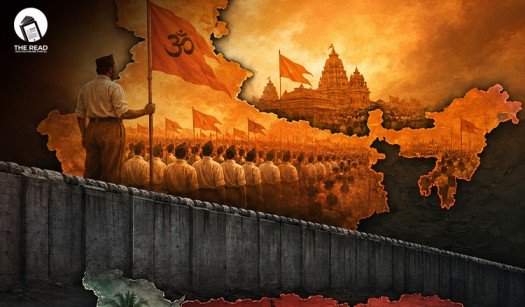
Why does saffron politics struggle to gain the same influence in South India as it does in the Hindi heartland? From the powerful legacy of the Dravidian movement in Tamil Nadu to the deep-rooted traditions of social reform in Kerala, regional identity, language, caste politics, and resistance to cultural centralisation have shaped a distinct political landscape.
Despite the decades of RSS expansion and dominance, Hindu nationalist politics remain a distant force in Kerala and Tamil Nadu.
India has mainly two faces: the South and the North. The states in the heartland of Hindi, like Uttar Pradesh, Madhya Pradesh, and Rajasthan, are where the saffron RSS flags fly high. But in the South, the story completely changes. Since the BJP is unable to form its own government, the people have no supportive narratives about the RSS. Often, Hindu political speeches are a big setback to the BJP.
These are not just geographical features of the North and South; they are the results of centuries of history, culture, language, and social reforms.
Wall of Dravida
In the South, especially in Tamil Nadu, the strong single barrier against saffron politics is the Dravidian movement.
Against the Brahmins' dominance and North Indian cultural supremacy in the South, the Dravidian movement emerged in the 20th century. This movement formed a basic sense of self-understanding in Tamil society.
Periyar EV Ramaswami, the father of the Dravidian movement, strongly criticized caste hierarchy, religious superstitions, and the idea that North Indian culture and Sanskrit are sacred. Political parties like DMK (Dravida Munnetra Kazhagam) and ADMK (Anna Dravida Munnetra Kazhagam) used this ideology as a strong election tool.
Language: the deepest fault line
In South India, language is not just a means of communication. It is pride, identity, and memories. Tamil, Telugu, Kannada, and Malayalam are ancient Dravidian languages with a rich literary tradition dating back over 2 millennia.
When the central government tries to give significance to the Hindi language in the country, the southern states will react with anger.
The anti-Hindi protests in Tamil society are not just distant memories; they are the factors in Tamil identity and southern myths.
Deep social reforms
Castes are the fuel of Indian politics. The discrimination in the north had not yet ended; because of religious and caste-based discrimination still between the societies, many clashes occurred because of this discrimination. The government is also using discrimination as a political weapon.
In southern India, in the 19th and 20th centuries, especially in Kerala and Tamil Nadu, immense social reform movements. In Kerala, Sri Narayana Guru conducted movements for all the lower castes and built showrooms of self-respect.
The fight against discrimination in South India reflects love, humanity, and respect. As Allah said in the Holy Quran in Surah Al-Mumtahanah, verse 8: "Allah does not forbid you from being kind and acting justly toward those who have not fought you because of religion and have not expelled you from your homes. Indeed, Allah loves those who act justly."




Comments