
Travel Tips
Lorem ipsum dolor sit amet, consectetur adipiscing elit.

Search
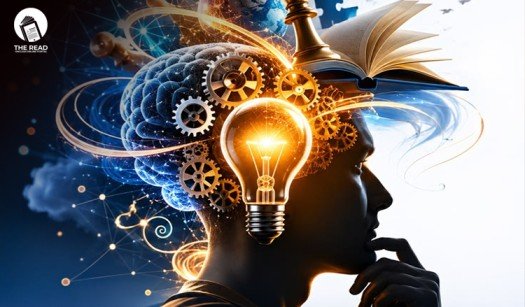
This piece explores intelligence as something broader than academic ability, connecting Howard Gardner’s multiple intelligences with Abraham Maslow’s hierarchy of needs. It argues that different forms of intelligence can flourish only when people have the safety, support, and opportunities needed to develop their potential.
For a long time, people have considered intelligence to be a fixed entity that people have or don’t have. Intelligence can be measured with …
The way the concept was formulated made it seem like we were valuing mainly rationality and verbal skills, while everything else was implied as ‘not human'. On the contrary, intelligence is much better understood nowadays. Intelligence is not merely one skill. Instead, intelligence is made up of a number of ways to interact with the world. Taking the double whammy of the idea of multiple intelligences and the hierarchy of needs will help one understand the idea.
According to psychologist Howard Gardner, intelligence is more than one type rather than a single type. According to Gardner, every individual acquires a mixture of these types of intelligence, depending on his/her strengths. Language intelligence and mathematical logic help people use language correctly and perform reasoning and problem-solving tasks. According to Gardner, other types of intelligence include musical intelligence, spatial intelligence, and kinesthetic intelligence, among other intelligences. He also discovered the distinct varieties of intelligence.
Interpersonal intelligence is the understanding of how people work, and intrapersonal intelligence is the understanding of how you work. Naturalistic intelligence is also the ability to recognise patterns in nature. One needs to possess various traits other than just being academically talented to be called 'smart', like being creative, emotionally intelligent, physically capable, and environmentally aware. Gardner explains the distinct intelligences found in people, while psychologist Abraham Maslow lays out the conditions under which these intelligences manifest and develop. According to Maslow’s (1943) hierarchy of needs, human development depends on the satisfaction of a series of needs, beginning with basic needs (food and safety), then social inclusion, esteem, and finally self-actualisation (the realisation of one’s potential).
These two concepts are closely connected. You can be super good at music, a leader, or really creative, but if you don't have what you need to survive, you might not be able to use those talents.
For example, a kid who is really good at art might not get better if they don't feel safe or get encouragement.
When people feel safe, important, and supported, they are more likely to try things and show off their talents.
They are more likely to find and display their intelligence.
At the top of Maslow’s hierarchy of needs is self-actualisation, or the full realisation of human potential. This is where multiple intelligences come to life. The self-actualised person can use his own special strengths, whether they are in the arts or in science or in his relationships or in his physical activities, toward his own unique goals and in service to society. Of course, this doesn’t mean that one must master all types of intelligence but develop the ones that are most natural to the individual.
The two concepts are tightly linked. Individuals have different strategies to thrive. Some strategies help people lead a functional life, such as music, leadership, etc. Some, however, don't. For instance, a child with high artistic intelligence will not develop it if he is not encouraged and lives in an insecure environment. On the other hand, people are more likely to show and want to use their own intelligence when they feel safe, valued, and supported.
At the highest level of Maslow’s hierarchy, self-actualisation is the ultimate expression of human potential. This is where many acts of intelligence take place. A self-actualised person takes their special talents to engage in artistic, scientific, relational, or physical activities to achieve personal goals. Essentially, it is not about mastering all the types of intelligence but rather developing the types that come naturally to you.
Putting these ideas together also impacts our ideas about education and success. Traditional systems tend to concentrate on only a few kinds of intelligence and fail to tap the real potential of many students. By understanding multiple intelligences and our basic human needs, we can create environments where everyone can grow and succeed in their own unique way.
Such a broad view of intelligence is important today.
The world has a lot of problems. They are all linked together.
We need to think creatively and work together with kindness to solve these problems.
The world's problems are a deal, and they need people who can think and feel and work as a team to make things better.
One type of intelligence is not enough to get the job done.
We also need the environment for any talent to grow and develop fully.
Intelligence and talent go hand in hand with the circumstances.
The world needs people with different kinds of intelligence to work together.
So intelligence is not about how much a person knows. It is also about how they think and how they respond to things. Intelligence is the way people talk to each other. Other. Other. Other. We need to think about all the types of intelligence and the needs of people to have a better understanding of what it means to be intelligent.
We get an idea of what it means to be really intelligent when we consider multiple intelligences and human needs.
All these problems are interlinked. All these problems are interlinked.
We need to be smart. We have to think of ideas and really care about the people around us. Then we have to work to figure out what to do about the problems. Solving the problems is going to take some time, and solving the problems is going to take a lot of work. The people and solving these problems are very important. We have to work to help the people and solve these problems.




Comments