
Travel Tips
Lorem ipsum dolor sit amet, consectetur adipiscing elit.

Search
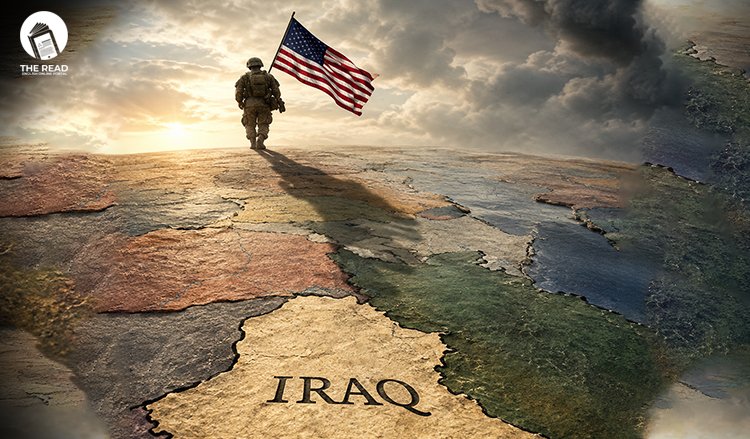
The US withdrawal from Iraq marks the end of a 23-year military presence but leaves behind questions that still demand answers. From the fall of Saddam Hussein to sectarian conflict, extremism, and political instability, the essay examines the unresolved consequences of the invasion and what it truly accomplished.
On September 30, 2026, the US Department of Defence headquarters, the Pentagon, announced that it had withdrawn its military troops from Iraq, marking 23 years of US military presence and occupation that commenced in 2003 under then-President George W. Bush, which turned out to be a critical geopolitical and transformative shift for Iraq.
Current President Donald Trump gleefully described this withdrawal as a decisive victory over ISIS, which actually needs clarification, since America launched the invasion against them in pursuit of its stated objective of removing autocratic Saddam Hussein's regime and establishing a democratic and secure Iraq, and Iraq became the second major scapegoat of the Bush administration's supposed War on Terror, following Afghanistan.
In the same year, on May 1, 2003, nearly two months after this event, Bush landed on the deck of the aircraft carrier USS Abraham Lincoln, wearing flight attire and waving the now-famous "Mission Accomplished" banner, and declared the end of major military operations in Iraq, even though a prolonged insurgency and years of warfare were still to come, and pushed the Iraqi nation into utter dismay. On the same soil, decades later, the same-sounding declaration still echoes grievance. When they wrapped up their artillery and combat operations in the name of completing this mission, they left that country in the clutches of a divided government and institutional weaknesses they had endowed it with, from then to today.
All began with the so-called war on terror, a devastating invasion waged in Iraq on the claim that Saddam Hussein’s regime possessed weapons of mass destruction, which later proved to be wrong, and harboured al-Qaeda terrorists, leading to the dismantling of the once-stable Saddam regime and imposing American military control over the state. Once Saddam was toppled, it deepened the Sunni-Shia sectarian division, fuelled civil conflict, and ushered in the climate for insurgent militias and the Islamic State. When the US took control, the Coalition Provisional Authority (CPA) dissolved the vast Iraqi army, seized their weapons, and put countless leaders in prisons and camps. By the way, the desperate situation of headless, experienced fighters who didn't know anything other than fighting made them join various factions of resistance groups with the ardent aim of defeating the external invaders.
Furthermore, the US failed for almost a year to start reconstructing an Iraqi security force, while sectarian militias were able to fill that vacuum, and they did so.
Camp Bucca stood pertinent here; it was the camp where detained militant leaders who were the pioneering figures of militias such as Abu Bakr al-Baghdadi, Abu Muslim al-Turkmani, and others were held, which turned out to be a converging point for several extremist minds under a single umbrella that effectively helped later to create the fertile ground for cultivating the roots of Al-Qaeda in Iraq (AQI), one of the most violent branches of terrorist organisations, which later transformed into the Islamic State of Iraq and Syria and spread terror across the region and beyond. To be clear, extremist groups wouldn't have broken out so easily on a wider scale if there hadn't been turmoil caused by American moves, which snowballed into frantic sectarian disputes and civil wars. These exacerbated and doomed the country's economy to depths.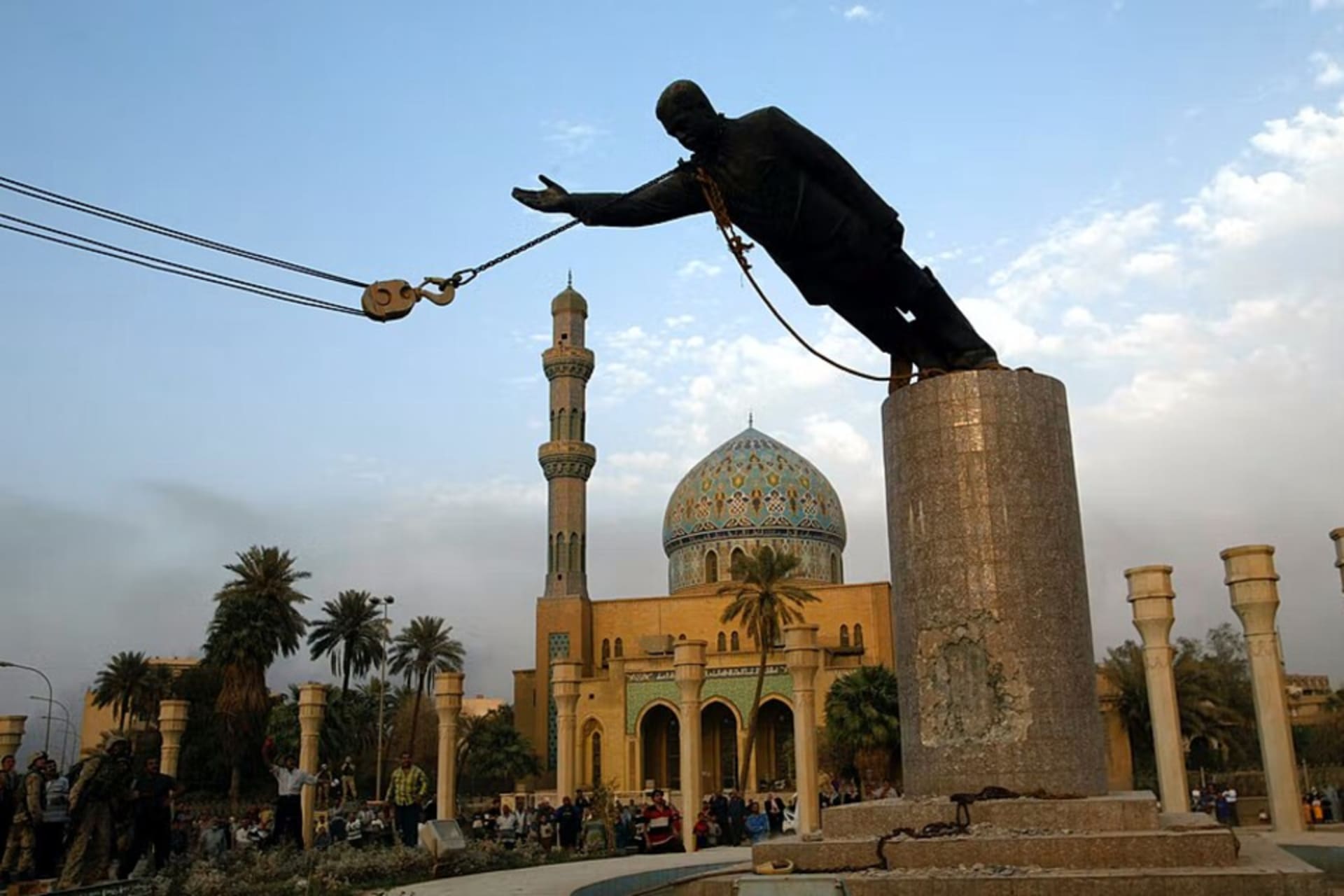
On the other hand, the sheer politically motivated purge and De-Ba'athification (policy imposed by the CPA removing senior Ba'ath Party members from government positions and dismissing thousands of teachers, civil servants, and state workers who had ties to the party) deprived the state of experienced diplomats and statesmen while also creating a massive number of unemployed citizens, leading to a massive breakdown of security, infrastructure, and public health and notably the deaths of 100,000 people, plunging the Iraqis into dismay and political vulnerability that lasts until today. Even the Western polls from the year of the invasion pointed out that 82% of Iraqis were opposed to the occupation. Furthermore, it culminated in the wider expansion of Iranian influence across Iraq; Saddam's Iraq, which had fought an eight-year war with Iran, remains a vital threshold for erupting communal contentions.
Definitely, there is no room for doubt about US tyranny in this. But what matters here is the fulfilment of established US promises to enact liberty and peace for Iraqis. And events of the past two decades indicate that it didn't deliver; plus, they got dragged into an instability that they can’t get rid of that easily. To be frank and clear, the invasion was a bad idea. The unabashed enthusiasm for so-called liberty, visible in the eyes of the 2003 US president, couldn't catch up even on the face of Donald Trump when he simply stated that “Iraq can now take care of its own security, and US troops are no longer needed," speaking as though they had been tasked with a mission and succeeded in it, which they hadn't, in fact.
After all, the world once again witnessed the heinous US hypocrisy; this is just one string from a heap, ranging from Afghanistan, Libya, Iran, and so on. Surely, it wouldn't be the last one.




Comments