
Travel Tips
Lorem ipsum dolor sit amet, consectetur adipiscing elit.

Search
October 7, 2023, was not an ordinary day in the history of the Palestinian-Israeli conflict. Rather, it was a watershed moment that changed the nature of the political and security landscape in the region, launching a war whose effects extended far beyond the Gaza Strip. The attack launched by Hamas that day led to the killing of about 1,200 people in Israel and the capture of 251 people, according to Israeli data, before Israel began a massive military campaign in the Gaza Strip. Since then, Gaza has become the epicentre of an unprecedented military, humanitarian, and political crisis, and October 7 has become a staple in every Israeli, Palestinian, and American debate about the region's future.
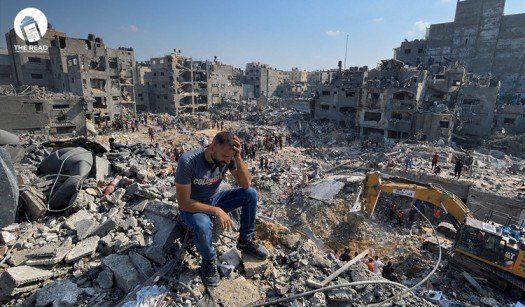
Three years later, the war is no longer in its original form. A US-brokered ceasefire took effect in October 2025, ending the full-scale war and leading to the release of the remaining Israeli hostages. However, the ceasefire did not end the conflict once and for all. Gaza continues to suffer from the effects of destruction, displacement, and the humanitarian crisis, while issues of weapons, the Israeli military presence, security arrangements, management of the Strip, and reconstruction remain unresolved. Recent analyses describe the situation as an incomplete ceasefire, with continued military action, and the plan to move into peaceful political talks is failing.
In Israel specifically, October 7 will remain a central factor in the national elections scheduled for October 27, 2026. These are the first Israeli general elections since the Hamas attack and the war that followed. The attack itself has become a subject of internal political controversy, particularly regarding the responsibility of the government and security services for the failures that preceded the attack. Prime Minister Benjamin Netanyahu faces political pressure related to his government's performance, security issues, and the investigation into the October 7 failures, while some of his rivals have made an independent investigation into those failures an essential part of their election rhetoric.
A change in the Israeli government would not necessarily mean a major shift in its Gaza policy. The war has created a new security outlook in Israel, with preventing another October 7-style attack becoming a broad priority. Therefore, much of the security approach formed since October 2023 could continue after the elections, although the approach to Gaza, the West Bank, and relations with the United States may differ. The elections could also reshape Israel’s domestic and foreign policy. A new government may adopt a different approach to Gaza and its relations with the United States and the international community, while continued political division could prolong the current stalemate. Thus, the significance of the October elections lies not only in who becomes prime minister but also in the coalition that emerges and how it responds to the legacy of October 7.
In the United States, the midterm congressional elections on November 3, 2026, add another layer to the future of conflict. These elections come in the second half of President Donald Trump's term and include all seats in the House of Representatives and approximately a third of the seats in the Senate. Therefore, the results will determine the political space available to the US administration to address Middle East issues, military aid, and relations with Israel. The issue of Israel and Gaza has become more sensitive in US politics since October 2023, particularly within the Democratic Party. In July 2026, 103 Democratic representatives voted alongside a Republican representative in favor of an amendment that would have stopped funding security aid to Israel. Still, it was not adopted, in an indication of growing disagreement within the party over American policy towards Israel.
However, this does not mean a complete US turn against Israel; security and military relations between the two countries remain strong, and Trump affirms his support for Israel despite some disagreements with Netanyahu over the war and regional issues. His refusal to declare his support for Netanyahu in the upcoming elections also reflects some political differences between them. The November 2026 elections come within a broader context, as issues of the economy, inflation, immigration, and the performance of the Trump administration will be among the most prominent concerns of voters, along with the files of Gaza, Israel, Iran, and foreign policy. The election results will affect the composition of Congress and its ability to influence the administration's policy on these issues.
Accordingly, the future could move towards establishing a ceasefire, starting the reconstruction of Gaza, and forming a transitional Palestinian administration with Arab and international support, or towards continuing a situation of «no war, no peace» while political tensions and issues remain unresolved. The Israeli elections and changes in US policy may also open the door to new negotiations on the future of Gaza and the Palestinian issue.
The most dangerous scenario is the collapse of the current arrangements and the return of escalation, especially if the issues of weapons, security, Israeli withdrawal, and governing Gaza remain without a clear agreement. Therefore, the elections alone will not determine the future of the conflict, but the next stage will depend on the political decisions that governments will take after the elections regarding the future of Gaza and the post-war period.
Three years after October 7, the region is facing a new phase, in which the question is not only how the war ended, but what will be built after it. The Israeli elections in October and the US elections in November will be important milestones in determining the next path. If the new phase leads to stable political and security arrangements, the ceasefire may become the beginning of a different path; however, if the underlying issues remain unresolved, tensions between temporary calm and renewed escalation may persist. The legacy of October 7 remains tied to what stakeholders will do in the coming years.




Comments