
Travel Tips
Lorem ipsum dolor sit amet, consectetur adipiscing elit.

Search
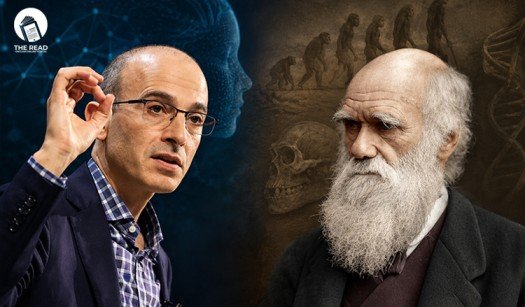
Exploring the relationship between evolution and Islamic thought, the essay examines Darwin’s and Lamarck’s theories alongside Yuval Noah Harari’s vision of humanity’s technological future, highlighting the tensions and possibilities of reconciling evolutionary ideas with Islamic theology.
Islam and evolution are two different ways. Contemporary atheists are using the concepts of Charles Darwin and Lamarck to support their arguments. This is a logical fallacy, as they are using pseudoscience.
However, the views of Islam on the concept of evolution are of different types. Basically, Islamic epistemology never rejects any knowledge until it opposes the revealed truths. This essay explores the varied perspectives on evolution concepts by connecting them to Islamic thought. Yuval Noah Harari's evolution concepts are also discussed in this paper.
After the emergence of the evolution concept, many atheists faced a dilemma in describing the origin of the universe and the design of the species in the universe. However, they used these concepts to spread their own ideologies through some logical fallacies.
The concept of Charles Darwin is the most popular evolutionary concept. He argues that different types of species have a common ancestor. He describes the similarities of genes. His concept of evolution is famous for some archaeological reports. But these reports made many scholars question the theory. Here is an interesting fact: the human gene and the gene of a banana are similar by 50%. He used the concept of survival of the fittest to state his argument. This argument is stated in his book Origin of Species and Means of Natural Selection.
Lamarck argues for the distinction between species formed by natural selection. That which is adaptable to nature will evolve as it. But this argument has many weaknesses by itself. This argument can be defended by EAAN (Evolutionary Argument Against Naturalism) as a theological argument.
Theologically, these evolution concepts are self-refuting arguments. That is, if natural selection is right, we are thinking with the same reasons that it would be improved and evolve. EAAN means Evolutionary Argument Against Naturalism.
Harari argues that Homo sapiens are evolving. They will evolve into another species, a Homo-cyborg, through the expansion of technology. He gives many examples to support his arguments, such as the expansion of artificial intelligence.
Harari's concept does not oppose any of the revealed knowledge, so there are no religious conditions. And in Islam, there are some corrections to his views.
Basically, Islam agrees with all knowledge when it stays within the boundaries of revealed knowledge. In Darwinism, Islam has three views: human exceptionalism, Adamic exceptionalism, and disagreement with the concept.
The proportion of Darwinism when compared to Islam is the rejection of some revealed knowledge: in Islam, Adam (A) is the first human, and he has no father or mother. But some Islamic scholars exclude Adam (A), or humans, from the concept and agree with the argument. But some prominent scholars, like Syed Ramazan Buti and others, opposed the concept.
To conclude, the concept of evolution can coexist with religious beliefs, including in Islam, as long as it does not directly contradict revealed knowledge. While certain aspects of Darwinism may conflict with Islamic teachings, such as the unique creation of Adam, Islamic thought still allows for critical engagement with these ideas.
Harari's perspective on the future evolution of Homo sapiens, propelled by technological progress, does not fundamentally oppose Islamic principles, but it demands careful contemplation within the framework of Islamic theology. Ultimately, the discussion on evolution in Islam stresses the significance of reconciling scientific knowledge with religious principles.




Comments