
Travel Tips
Lorem ipsum dolor sit amet, consectetur adipiscing elit.

Search
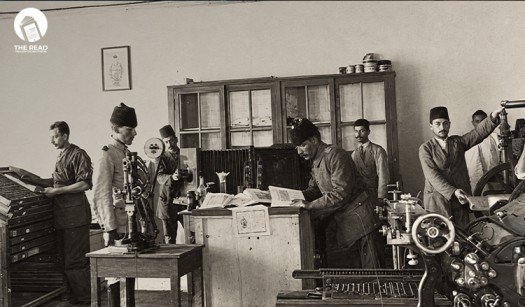
From the earliest printed editions to the landmark publications in Cairo and Madinah, the history of Quran printing reveals how technology, scholarly authority and religious devotion shaped the standardisation of the Mushaf, making it more accessible while preserving its textual integrity.
For most of Islamic history, the Quran was copied by hand. Expert calligraphers devoted years to a single copy, treating the work as an act of artistic and religious devotion, so that the Quran was valued not only as a guide but also as an object of beauty. The same tradition also meant that the text passed through many hands and many regional practices, and over the centuries minor differences in script and pronunciation emerged in the transmission of manuscripts. The history of Quran printing is largely the story of how Muslims met the need for a standard, reliable mushaf (the written copy of the Quran). This article follows that story from the first flawed printed editions to two landmarks of standardisation: the King Fuad edition (Cairo, 1924) and the King Fahd Complex (Madinah, 1984).
Muslims did not produce the earliest printed Qurans for Muslims. A Quran was printed in Venice in 1537–38 by the printers Paganino and Alessandro Paganini. Its text contained numerous errors; a rumour spread that the pope had the print run burnt, and the edition was long thought lost until a single copy was found in Venice in 1987. Another edition appeared in Hamburg in 1694 under the German orientalist Hinckelmann; it was filled with typographical and other errors. A further edition was printed in Padua in 1698.
The first Islamic printing of the mushaf appeared in Saint Petersburg in 1787 by order of Empress Catherine II, under the Tatar scholar Mullah Osman (Usman Ismail), and another edition followed in Kazan in 1801. The Kazan edition, however, did not follow the written form of the Uthmani mushaf and did not include verse numbers.
The difficulties facing early printers were real. Arabic script is complex, and reproducing it well demanded skilled craftsmen and sophisticated techniques. Early printers struggled to render diacritical signs and vowel points, which earlier manuscripts had often omitted or rendered wrongly. They also tried to reflect the variations of the different schools of recitation in the written text, though not always successfully. The editions were generally printed with movable type, which was more efficient than carving every page onto a wooden block, and they borrowed their page structure from European printing practice while keeping elements of Arabic calligraphy and, at first, borders and floral designs. Because the Quran is sacred, printers also had to weigh the wish for mass production against the integrity and sanctity of the book, and printing was expensive enough that only limited numbers could be produced. Colour was used to highlight important verses or sections, in imitation of illuminated manuscripts, but as the need to stress the purity and simplicity of the text grew, the elaborate decoration declined, and pages came to be presented clearly and legibly without ornament. These editions did not match the type and beauty of the manuscripts. Yet they showed what technology could contribute to the spread of religious literature, and they paved the way for what followed.
Printing also changed who could own the Quran. Before print, manuscripts were expensive and difficult to obtain, which strongly restricted access to the book. Printed copies could be circulated more easily and at lower cost, making it possible for people from all walks of life to acquire one. The wider supply of printed texts also fostered Islamic scholarship, including commentaries (tafsir) and other religious works, and encouraged private devotion and independent study, which in turn supported Quranic schools and madrasas. Technology continued to improve, from movable type to offset printing and later digital printing, and each step raised the quality of the editions, widened access to them, and lowered their price.
Before printing, the Quran was transmitted chiefly through oral recitation and manuscript copying, and this gave rise to differences in pronunciation, recitation, and text. Printing changed the situation in two ways. First, it provided a common reference for Muslims throughout the world; early printed editions drew on several manuscript sources and consulted scholars to ensure consistency. Second, it made comparison easier. When Muslims could hold several printed copies, they could compare them, identify discrepancies, and refine how the text was interpreted.
The Quran is almost as much an oral text as a written one, so a standard edition had to satisfy more than the eye. It had to serve the reciter. This is why the rules of tajwid (the correct pronunciation of the Quranic letters) stand at the centre of the story that follows.
In 1924, the Amiri Press in Cairo published an edition prepared by a committee of scholars of al-Azhar, who had begun work in 1907, under the patronage of King Fuad I of Egypt. It was meant to provide a standard, official text of the Quran. It answered a real need, since minor differences in script and pronunciation had accumulated over the centuries in the transmission of manuscripts and in regional practices. Its recitation follows Hafs an Asim, the reading most widely used in the Muslim world.
Two features define the edition. The first is its calligraphy, which combined the beauty of classical Arabic lettering with the precision required by modern print. The second is its strict adherence to orthographic conventions, which meant that the book was more than a beautiful ornament: it was exact enough to be recited from, with close attention to the rules of tajwid. Its influence did not stop at Egypt. It became the model for later editions in other Muslim countries, combining textual accuracy with beauty of presentation, and its wide circulation made it important for standardising the teaching, recitation and memorisation of the Quran across the Muslim world.
If the Cairo edition offered a model for a single text, the King Fahd Complex for the Printing of the Holy Quran in Madinah turned standardisation into an institution. Named after King Fahd ibn Abd al- Aziz Al Sa ud, who laid its foundation stone in 1982 and inaugurated it in 1984, it is considered the largest and most significant Quran printing centre of the contemporary era. Its stated aims are to print and distribute Qurans, to safeguard the textual integrity of the Uthmani text, and to ensure uniformity in all copies.
Its scale is striking. Its official website reports an average output of about ten million copies a year, and cumulative totals run to the hundreds of millions of copies; part of the output is distributed free, including as gifts to pilgrims. Accuracy is the declared priority. Every page is reviewed by a team of Islamic scholars, linguists and reciters, supported by quality-control procedures and specialised typesetting software, so that the text, diacritical marks and recitation symbols are correct. The Complex prints in different forms of Arabic script, including Naskh and Uthmani, based on the orthographic standard associated with the caliphate of Uthman.
Its work extends beyond the Arabic text. It prints translations in more than sixty languages, which are vetted by specialists and are not considered a substitute for the Arabic original. It prints Braille editions for visually impaired readers and develops digital projects such as e-books and applications. It also supports research on ancient Quranic manuscripts, the variant readings (qiraat) and the rules of tajwid, and it has produced guidebooks to promote correct recitation. Through international conferences, exhibitions and similar events, it also brings the Quran to the attention of the public, including non-Muslim scholars interested in Quranic studies, and it coordinates the work of scholars across these fields.
Why did Muslims come to accept printed Qurans at all? Part of the answer lies in scholarly validation. Official editions were scrutinised and verified by Islamic scholars in order to avoid errors and inconsistencies that would have undermined their credibility, and with the endorsement of several religious authorities, the public gradually came to trust the printed copy. Official editions became a point of reference for Muslims everywhere, which helped to foster a sense of community and a shared Islamic identity.
Standardisation did not arrive without criticism, however. Some traditionalists argued that printed texts could not equal the spirituality or the artistry of manuscripts and that religious experience involved touching and holding a handwritten copy. Others pointed out that an error introduced at the production stage could be reproduced across many copies, which raised questions of reliability and authenticity. A further fear was that mass production might turn the Quran into a marketable commodity and make it appear cheapened. Digital editions have since raised their own concerns, among them the possibility of errors in digital copies and the loss of a physical connection to the text. The acceptance of official editions also contributed to the erosion of manuscript-based traditions. On balance, the benefits of wider availability, standardisation and cross-cultural exchange have outweighed these criticisms, but they remain part of the story and should not be forgotten.
The road from Venice to Madinah runs from flawed early editions, through an official text that set a model for recitation and orthography, to an institution that combines scholarly review with large-scale production. Printing did not end the tradition of careful transmission. At its best it carried the same concern for accuracy, scholarly consultation and correct recitation into a new technology, and in doing so it gave Muslims a common reference for the book at the centre of their faith. Digital editions now open further possibilities for access, personalisation and preservation, and the same questions of accuracy and scholarly review will apply to them.




Comments