
Travel Tips
Lorem ipsum dolor sit amet, consectetur adipiscing elit.

Search
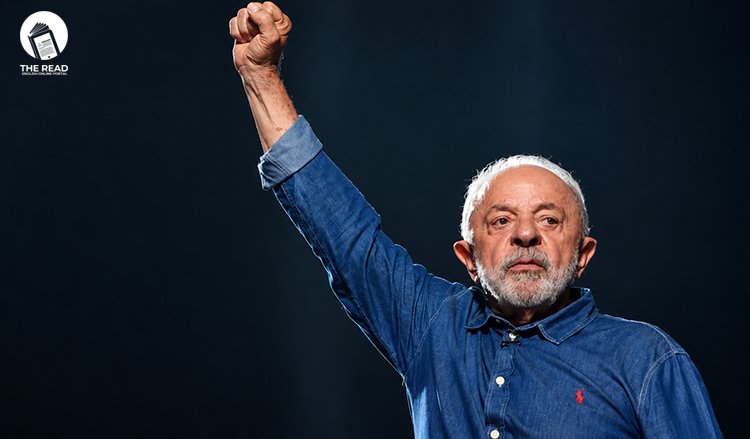
Two weeks ago, Lula da Silva looked like a man running out of race. On October 4, Flávio Bolsonaro finished the first round ahead, 47.03% to 45.16%, and most runoff polls kept him at the forefront. Then, on October 25, Brazil changed its mind. Lula won 51.79% to 48.21%, a margin of 4,430,191 votes, securing his presidency title and, with it, a fourth term. He turned 81 two days later.
The scale of such a comeback says something about the man. Lula is a former union leader born into poverty, and this was his seventh presidential run. In a country where politics is usually a family inheritance, he remains the crystal proof that a poor child can end up governing the state. That story still moves millions of Brazilians, especially in the Northeast and the working-class suburbs, and it explains why he could lose a round and still win the contest. 
The Bolsonaro camp’s mistake was to treat the presidency as an inheritance. Flávio ran on his father’s script, promising to move the embassy to Jerusalem, restore ties with Israel, and pardon his father. Netanyahu openly hoped he would win. The strategy was built to mobilise evangelical voters, and it worked within that bloc: a late-September Quaest poll had Flávio at 46% among evangelicals and Lula at 27%. But a loyal base does not suffice for a majority. The same campaign that thrilled its core alarmed everyone else.
Two promises did the damage. The first was the pardon. His father, Jair Bolsonaro, was sentenced in September 2025 to 27 years for trying to overturn the last election, and Lula turned the question into a single sentence on the stump: Flávio wants to win to free his father, and Lula wants to win to keep him in prison. The second was the Trump connection. Earlier American tariffs of up to 50% were tied to the criminal case against Jair Bolsonaro, and when new 25% tariffs arrived in June, a photo of Flávio with Trump hurt his own campaign. Lula cast himself as the defender of national sovereignty. When Flávio asked Washington to delay the tariffs, Lula called it an act of treason against the Fatherland. Many voters who are tired of the left were not ready to reward a candidate whose foreign pals were taxing their own economy.
For ordinary Brazilians, the result is, first of all, about protection. Lula did not win an easy mandate: the campaign was fought over the cost of living, the economy and organised crime, and the OECD (Organisation for Economic Co-operation and Development) expects growth to shrink to 1.6% this year. Voters were not ready to forgive his failures, so much as refusing the alternative. What they secured is that the verdict on the 2022 coup attempt stands. The courts punished it, the ballot box rejected its heir, and the institutions held.
The result also transcends well beyond Brazil. Lula has been one of the world's loudest leaders against the war in Gaza. He has called Israel’s military action genocide and defended a two-state solution, and for that, his opponents branded him antisemitic. Brazilians did not treat it as disqualifying or unlikeable. They did not vote on Gaza, and nobody should pretend otherwise. They voted on bread, safety, and sovereignty. But a country of more than 200 million has now chosen a president who speaks eloquently about international law and civilian life over a campaign wrapped in Trump’s and Netanyahu’s embrace. For a world watching the far-right outpouring the same script of grievance, foreign patrons and personal loyalty, that is a meaningful signal that the formula is faltering.
The final chapter is not yet written. Flávio says he cannot recognise the result and will ask the courts to annul it. Brazil has heard that tune before, and it ended with a 27-year sentence. Lula takes office in January with a narrow margin, a divided country and a long list of promises. But for now, the Bolsonaro dynasty has been told by the voters that the presidency is not a family heirloom.





Comments