
Travel Tips
Lorem ipsum dolor sit amet, consectetur adipiscing elit.

Search
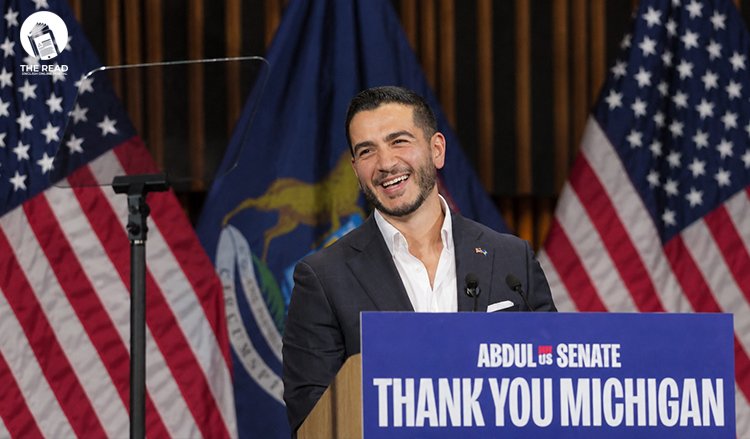
Tracing the journey of Muslim Americans from political under-representation to growing influence, the article explores their evolving role in US politics, landmark electoral victories, and continuing struggle against Islamophobia and discrimination.
By the recent midterm election, American Muslims have expanded their presence in American politics, shifting from a historically under-represented community to an active, participating community in the democratic leadership. Despite facing a wide range of discrimination and Islamophobia, the Muslim communities have now significantly strengthened their representation in politics.
Following the events of September 11 in 2001, Muslim communities confronted an increased level of Islamophobia and smears—this motivated growing political consciousness and representation within the Muslim communities. Voter registration campaigning activities and civic organisations, for instance, CAIR and EMGAGE, supported and helped organise muslim voters.
Over the years, Muslim political representation in the United States has seen a significant increase. In 2006, Keith Ellison became the first Muslim elected to the US Congress. Following this, in 2008, André Carson became the second Muslim to win a seat in the Congress. Another notable milestone came in 2018, when Ilhan Omar and Rashida Tlaib became the first Muslim women elected to the U.S. Congress. As a more recent development in 2025, Zohran Mamdani made history by being the first Muslim to be elected as the mayor of New York City.
Muslim Americans are increasingly represented in city councils, state legislatures, and judicial offices. Their voter registration and participation have also grown, which is making them prominent in closely contested elections, and organisations such as CAIR and EMGAGE continue to motivate civic engagement and political consciousness within the community.
The Palestinian concern, mainly the humanitarian instability in Gaza, has become an essential concern for Muslim representatives and voters. Muslim representatives such as Ilhan and Rashida Talib have raised concerns for the Muslim community about US foreign policy, human rights, and human rights violations in Palestine.
Still, Muslim communities continue to endure and face Islamophobia, discrimination, and identity-based political attacks.
Another important turning point in the political representation of Muslim Americans was the 2026 midterm election. Abdul El-Sayed became the first Muslim elected to the US Senate following his historic victory in the Michigan US Senate election. His triumph demonstrated Muslim Americans' growing role in shaping political discussions, especially those related to social justice, civil rights, and US foreign policy.
However, El-Sayed's triumph coincided with a political effort characterised by Islamophobic accusations from Donald Trump and other Republican leaders, who questioned his devotion to Islam and accused him of having extremist connections, which he refuted. Thus, his election marks a turning point in the community's continuous fight against discrimination as well as a turning point in Muslim political representation.




Comments