
Travel Tips
Lorem ipsum dolor sit amet, consectetur adipiscing elit.

Search
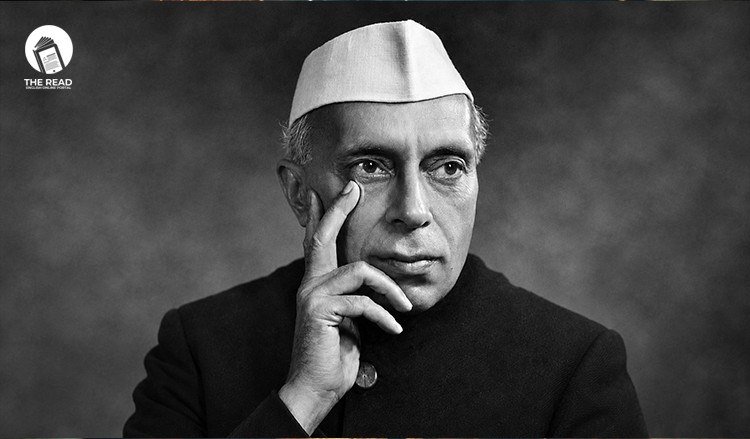
An exploration of Jawaharlal Nehru’s vision for building modern India, particularly in the context of Children’s Day, celebrated in his memory, examining his contributions to education, scientific development, economic planning and secularism while critically assessing the contradictions, limitations and lasting impact of his political legacy.
When India achieved independence in 1947, it inherited a country facing enormous challenges. Poverty, illiteracy, communal tensions, economic inequality, inadequate infrastructure, and the consequences of colonial exploitation stood in the way of national progress. Political independence had been achieved, but transforming a diverse, economically weakened society into a modern democratic nation required far greater effort.
At this critical moment, Jawaharlal Nehru, India's first prime minister (1947–1964), emerged as one of the principal architects of the country's post-independence development strategy. His vision extended beyond establishing a government or strengthening political institutions. He sought to build a nation based on democratic values, scientific reasoning, economic self-reliance, secular citizenship, and social progress.
Nehru believed that the future of India depended on its ability to develop its own intellectual, scientific, educational, and industrial capacities. For him, nation-building was not merely a political process; it was a long-term social and institutional transformation.
However, Nehru's legacy remains a subject of considerable political debate. While his admirers recognise him as a central figure in establishing the foundations of modern India, critics question aspects of his economic policies, administrative approach, secularism, and understanding of Indian society. A meaningful assessment must therefore examine both his contributions and their limitations.
1. Education as the foundation of nation-building
One of the most significant aspects of Nehru's nation-building vision was his emphasis on education. He understood that political democracy could not become meaningful without an educated population capable of participating in public life.
Under colonial rule, access to modern education remained unequal, and educational opportunities were concentrated among limited sections of society. Independent India therefore needed an educational framework capable of addressing the requirements of a democratic and developing nation.
Nehru's government supported the establishment and development of institutions that would strengthen both general and higher education. The University Education Commission, chaired by Dr Sarvepalli Radhakrishnan (1948–49), examined the condition and future of university education. Subsequently, the Secondary Education Commission, chaired by Dr A. Lakshmanaswami Mudaliar (1952–53), focused on the reform of secondary education. 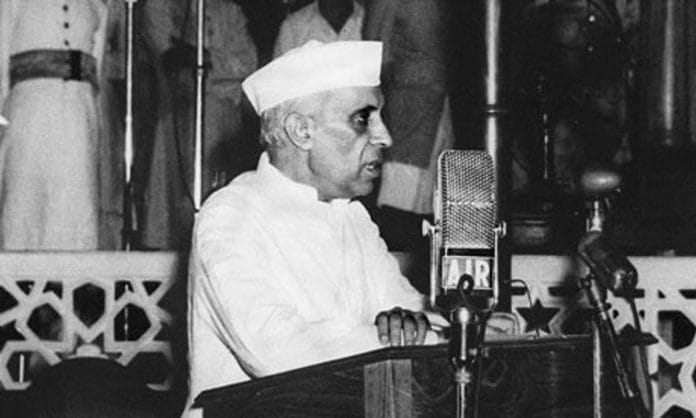
These commissions reflected an attempt to reorganise education according to the intellectual, economic and social needs of independent India.
The establishment of the National Council of Educational Research and Training (NCERT) in 1961 was another important step. It contributed to curriculum development, educational research and the preparation of textbooks.
Nevertheless, the success of an educational vision should not be measured only by the establishment of institutions. India continued to experience serious problems of illiteracy, unequal access, educational exclusion, and inadequate school infrastructure. The development of elite higher educational institutions advanced more rapidly than the universal improvement of elementary education in many areas.
Thus, Nehru's educational legacy represents both an important institutional achievement and an unfinished social project.
2. Scientific temper and the modern Indian imagination
Perhaps the most distinctive feature of Nehru's political philosophy was his commitment to scientific temper.
He believed that a modern nation should develop the ability to question established assumptions, examine evidence, accept new knowledge, and solve problems through rational investigation.
For Nehru, science was not simply a collection of technical discoveries. It was a method of thinking that could transform society.
In a country where poverty, superstition, social discrimination, and traditional inequalities continued to shape public life, he considered scientific reasoning essential to social progress.
His emphasis on scientific temper was also reflected in his writings, particularly The Discovery of India. He argued that the scientific approach should influence not only laboratories and universities but also everyday social and political decisions.
This idea eventually became part of India's constitutional framework. Article 51A(h), introduced through the 42nd Constitutional Amendment in 1976, identifies the development of scientific temper, humanism and the spirit of inquiry and reform as a fundamental duty of every citizen. This constitutional provision came after Nehru's death, but it reflects an intellectual commitment closely associated with his vision.
The continuing relevance of scientific temper is particularly significant in contemporary India, where public discussions frequently involve questions of misinformation, pseudoscience, technological change, and the relationship between faith and rational inquiry.
Scientific temper, however, should not be interpreted as hostility towards religion or cultural traditions. A democratic society can respect religious freedom while encouraging evidence-based reasoning and intellectual openness.
The real challenge is to create a society in which belief does not prevent inquiry and scientific knowledge does not become an instrument of cultural arrogance.
3. Building scientific and technological institutions
Nehru understood that political independence without scientific and technological capability could leave India economically dependent on more industrialised countries.
Consequently, his government gave considerable attention to scientific research, engineering education and technological development. 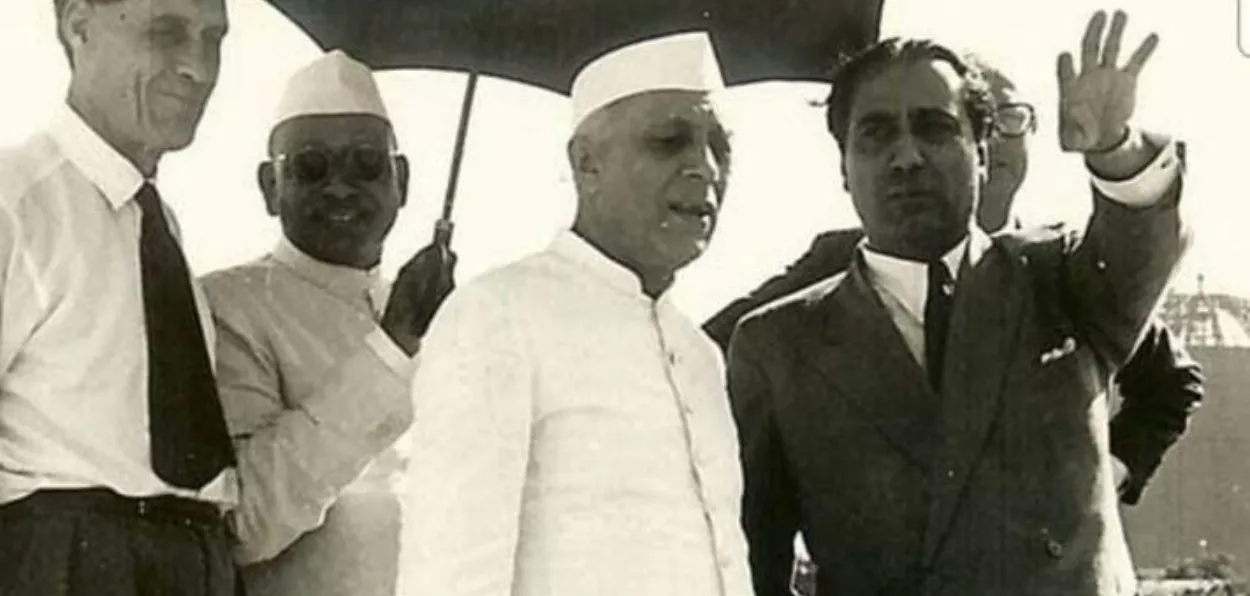
The establishment of the Indian Institutes of Technology became one of the most visible achievements of this strategy. IIT Kharagpur was established in 1950 and formally inaugurated in 1951. It was followed by IIT Bombay (1958), IIT Madras (1959), IIT Kanpur (1959), and IIT Delhi (1961).
These institutions were intended to produce highly trained engineers, scientists, and technical professionals who could contribute to India's industrial and technological development.
The expansion of scientific research also included institutions and initiatives in atomic energy, medicine, industrial research and defence technology.
Some important examples include:
* Atomic Energy Commission (1948): Established to develop India's nuclear research capabilities.
* All India Institute of Medical Sciences (AIIMS): Established in 1956 to advance medical education, research and healthcare.
* Council of Scientific and Industrial Research (CSIR): Expanded the institutional infrastructure for scientific and industrial research.
* Defence Research and Development Organisation (DRDO): Established in 1958 to strengthen indigenous defence research.
* National Physical Laboratory: Supported scientific measurement, standards, and physical research. * Tata Institute of Fundamental Research (TIFR): Developed as a major centre for advanced scientific research.
The contribution of scientists such as Homi J. Bhabha, S.S. Bhatnagar and other leading researchers was equally important. Nehru's role was largely that of a political leader who provided institutional support, resources and national priority to scientific development.
These investments helped create the foundations for India's later achievements in nuclear science, space research, engineering, medicine and information technology.
Yet, the development of advanced scientific institutions did not automatically resolve the technological difficulties of ordinary citizens. India continued to struggle with limited research funding, unequal access to technology, and dependence on imported equipment in several sectors.
The broader lesson is that scientific institutions must remain connected to public welfare, industrial development, and the everyday needs of society.
4. Economic planning and the pursuit of self-reliance
Nehru's nation-building strategy also relied heavily on economic planning and the development of public-sector industries.
He believed that the state had an important responsibility in directing economic development, particularly because private capital and industrial infrastructure were insufficient to meet the requirements of a newly independent country.
The Planning Commission was established in 1950, and India adopted a series of Five-Year Plans.
The Second Five-Year Plan (1956–1961), influenced significantly by economist P.C. Mahalanobis, emphasised heavy industries, capital goods and industrial expansion.
Steel plants, engineering industries, energy projects and major infrastructure developments became central elements of this approach.
The broader objective was to reduce dependence on foreign industrial powers and create the capacity to manufacture essential goods within India.
This strategy helped establish an industrial foundation that would support subsequent economic development.
However, Nehru's economic model also attracted criticism. Excessive state control, bureaucratic procedures, licensing requirements, and inefficiencies in public-sector enterprises later became significant concerns.
Critics argue that the planning system sometimes restricted private entrepreneurship and reduced economic flexibility.
Supporters, on the other hand, point out that a country with limited capital, widespread poverty, and weak industrial infrastructure required substantial public investment.
A balanced assessment should recognise that the model addressed some of India's immediate developmental needs but also created institutional rigidities that later governments had to confront.
5. Secularism, pluralism and national unity
India's greatest strength is its diversity. Religion, language, caste, region and cultural identity have shaped the country's social structure for centuries.
Nehru believed that national unity could not be achieved by imposing a single religious or cultural identity on the entire population. Instead, he supported a political framework in which citizenship and constitutional rights would remain independent of religious affiliation.
His understanding of secularism emphasised the responsibility of the state to protect equal citizenship and maintain a democratic political order.
This vision was particularly significant in the aftermath of Partition, when communal violence and displacement had deeply affected Indian society.
The challenge was not simply to establish political stability but to create confidence among communities that had experienced fear, insecurity and division.
Nehru's secular outlook contributed to the development of a political language centred on religious coexistence, minority rights and constitutional equality.
However, the practice of secularism during his premiership was not without contradictions. Scholars have questioned whether the government consistently translated its secular commitments into institutional safeguards and social realities.
There were also political disagreements over the relationship between religion, public life, personal laws and the state's role in social reform.
These debates demonstrate that secularism is not a completed achievement but an ongoing democratic responsibility.
It is equally important to distinguish secularism from hostility towards religion. In a plural society such as India, religious freedom and equal citizenship must reinforce rather than undermine each other.
6. Cultural institutions and the idea of a plural India
Nehru's vision of modernisation was not entirely limited to science, engineering and industrial development. He also recognised the importance of literature, music, theatre, cinema and artistic expression in shaping national identity.
Independent India needed cultural institutions capable of preserving its artistic heritage while encouraging contemporary creativity.
Several important institutions were developed during his period:
* Sahitya Akademi (1954), for the promotion of literature.
* Sangeet Natak Akademi (1953), for music, dance and drama.
* Lalit Kala Akademi (1954), for the visual arts.
* National School of Drama (1959), for theatre education and practice.
These institutions helped create national platforms for artistic communities and encouraged cultural exchange across linguistic and regional boundaries.
Their significance lies in the recognition that national identity need not be culturally uniform.
India could remain united while preserving its many languages, literary traditions, artistic forms and regional identities.
Nevertheless, questions concerning the representation of different cultural traditions, regional voices and indigenous knowledge in national institutions remain relevant.
A truly inclusive cultural policy must provide space for classical and folk traditions, minority cultures, regional languages and emerging forms of artistic expression.
7. The political contest over education and historical interpretation
Education is never entirely separate from politics. The way a country teaches its history, presents its national identity and interprets its cultural heritage influences how future generations understand society.
This became particularly significant in post-independence India, where different political and ideological movements developed competing visions of national identity.
The educational framework associated with Nehru placed considerable emphasis on secularism, scientific reasoning, constitutional democracy and modern historical scholarship.
On the other hand, various critics of Nehruvian thought argued that its approach to Indian civilisation, religious traditions and cultural identity did not sufficiently reflect the depth and diversity of indigenous intellectual heritage.
The growth of organisations such as Vidya Bharati and the expansion of the Saraswati Shishu Mandir network reflected the emergence of alternative educational approaches rooted in a different understanding of national culture.
These developments should be examined within the wider democratic competition between different ideological traditions.
There are legitimate debates about whether educational institutions have adequately represented India's civilisational history, religious traditions, social reform movements and regional contributions.
At the same time, education becomes problematic when historical scholarship is subordinated to political loyalty or when textbooks are transformed into instruments of ideological mobilisation.
This concern is not limited to one political party or period. Governments of different ideological orientations have influenced educational curricula and historical interpretation.
Therefore, educational institutions must maintain academic integrity, encourage multiple perspectives and distinguish historical evidence from political interpretation.
The objective should not be to eliminate ideological disagreement but to ensure that disagreement takes place through scholarship, evidence and democratic debate.
8. The limitations and contradictions of Nehru's nation-building model
A serious political assessment of Nehru must move beyond admiration and examine the limitations of his developmental philosophy.
Although his government established important institutions, several fundamental problems remained unresolved.
First, the gap between elite and mass education: India developed internationally recognised higher educational institutions, but elementary education, literacy and access to quality schooling remained inadequate for large sections of the population.
Second, excessive dependence on state-led development: The emphasis on public-sector industries and centralised planning helped establish industrial capacity, but also contributed to bureaucratic inefficiency and economic restrictions.
Third, the challenges of secularism: Nehru's commitment to secularism was significant, but communal tensions did not disappear. The gap between constitutional ideals and social realities remained substantial.
Fourth, the limitations of centralised governance: Nehru's political dominance and the organisational strength of the Congress sometimes limited the development of a more competitive political environment within the ruling establishment.
Fifth, the relationship between modernity and tradition: Nehru's preference for scientific rationality and modernisation was influential, but critics argue that his approach did not always sufficiently engage with the emotional, spiritual and cultural dimensions of Indian society. These criticisms do not invalidate his achievements. Rather, they demonstrate that nation-building is a complex process in which even ambitious political visions encounter institutional, economic and social limitations.
The responsibility of later generations is neither to preserve every policy unquestioningly nor to reject an entire historical legacy because of its shortcomings. It is to understand what worked, what failed, and what requires improvement.
9. Nehru's legacy in contemporary India
More than six decades after Nehru died in 1964, many of the questions that shaped his political philosophy remain central to Indian public life.
How can India achieve economic self-reliance while remaining integrated into the global economy? How can education become accessible to every citizen rather than remaining an advantage of privileged groups? How can scientific development coexist with cultural and religious diversity?
How can national unity be strengthened without weakening regional identities and minority rights? How can public institutions remain independent of excessive political influence?
These questions demonstrate why the discussion surrounding Nehru is not merely about remembering a former Prime Minister. It concerns the fundamental direction of the Indian republic.
Contemporary India has made significant progress in information technology, space research, infrastructure, healthcare, industrial development and higher education. These achievements have emerged through the contributions of successive governments, scientists, entrepreneurs, educational institutions and ordinary citizens.
They should not be attributed exclusively to one political leader or ideology.
At the same time, the institutional foundations established during the early decades of independence remain an important part of India's developmental history.
The contemporary political challenge is to strengthen these foundations while addressing their historical weaknesses.
A democratic nation should be capable of appreciating the contributions of its earlier leaders without turning them into unquestionable figures. Similarly, political disagreement with Nehru should not become an excuse to disregard the institutions and developmental achievements associated with his period.
Historical evaluation requires evidence, intellectual honesty and the willingness to acknowledge complexity. Conclusion: Nation-building beyond political personalities
Jawaharlal Nehru's contribution to Indian nation-building must ultimately be understood through the institutions, ideas and developmental priorities that shaped the early decades of independent India.
His emphasis on education, scientific temper, technological self-reliance, secular citizenship, economic planning and cultural development provided an important framework for India's transition from colonial rule to a modern democratic republic.
His vision was not without limitations. The persistence of poverty, educational inequality, bureaucratic inefficiency, communal tensions and developmental imbalances reveals the distance between political ideals and social realities.
Nevertheless, the significance of his legacy lies in the questions he placed before the nation: What kind of society should India become? What knowledge should guide its progress? How should a diverse population live together? And what responsibilities should the state assume in building a just and prosperous society?
These questions remain relevant irrespective of which political party governs the country.
Ultimately, nation-building cannot be reduced to the achievements of one leader, one party or one historical period. It is a continuous process shaped by democratic institutions, public participation, intellectual freedom, social justice and collective responsibility.
The greatest tribute to any nation-builder is not the unquestioning celebration of his legacy, but the willingness to critically examine his ideas, preserve what is valuable, correct what was inadequate and carry the nation forward.
India does not need to choose between remembering Nehru and embracing its contemporary aspirations. It needs the historical understanding to recognise its achievements, the intellectual courage to confront its failures and the democratic maturity to build a future that belongs to all its citizens.




Comments