
Travel Tips
Lorem ipsum dolor sit amet, consectetur adipiscing elit.

Search
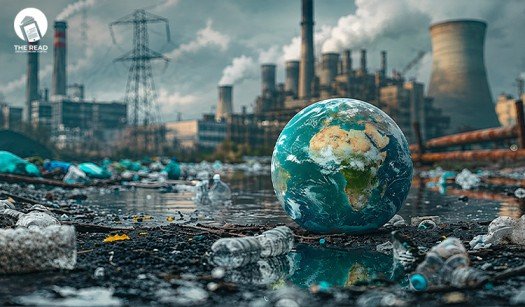
An examination of climate justice and the financial responsibilities of nations, exploring historical emissions, the CBDR principle, and the role of developed and developing countries in financing climate action and ensuring environmental accountability.
The economic and human costs of climate change are no longer distant projections or perceptions. This is evident in several ecological disasters, soil erosion, and the destruction of natural ecosystems. This demonstrates that all nations share responsibility for addressing these issues and need to contribute to ecological recovery from the damage caused by human activities. In accordance with the CBDR (Common But Differentiated Responsibilities) principle under the UNFCCC, formalised at the 1992 UN Rio Summit, all nations are required to respond to the issues of climate change, but high-income and historically industrialised countries (such as the USA and Japan), alongside major contemporary emitters like China, must provide financial support for stabilising the worsened condition. Here, the polluter-pays principle and historical responsibility shape the distribution of financial support and investment.
The UNFCCC's principle of CBDR proposes the "polluter pays" principle by focusing on wealthy nations due to their higher emissions of greenhouse gases. According to the "polluter pays" principle, nations with high emissions of greenhouse gases are responsible for the primary moral and financial obligation to clean up, adapt, and recover from loss and damage, based on UN statistics and infographic data. However, the UN recognises the historical responsibility of early-industrialised countries, whose extensive greenhouse gas emissions since the Industrial Revolution have contributed significantly to the accumulation of greenhouse gases in the atmosphere. Therefore, the UNFCCC's policy of CBDR posits two major stances on this assertion.
The first and foremost consideration is the historical cumulative contribution to climate change risks. As previously noted regarding the excessive emissions of greenhouse gases and the Industrial Revolution period's impact on emissions, high-income and early-industrialised countries are the predominant contributors to emissions, and these nations are required to pay for it. In this case, the UNFCCC stands on the polluter pays principle based on these empirical data and analyses. Therefore, these industrialised nations must allow capital infusion and technological assistance for developing and low-income countries.
The second core stance is that capital infusions and technological assistance are provided by financially capable and technologically advanced countries. High-income nations possess the capital and advanced technologies needed to fund mitigation, climate adaptation, and underwriting methods such as the UN loss and damage funds. Building on this argument, the UNFCCC prioritises countries with greater financial and technological capabilities to finance efforts towards environmental justice. This approach aims to prevent excessive financial burdens on economically weaker countries, which leads to the stagnation of the economy.
However, the management of global climate funds by governments raises concerns about the effective use of financial resources allocated to address ecological devastation. The corruption of this wealth and intergovernmental exchanges control the allocated wealth rather than bolstering payment without burdening developed countries or jeopardising the ecology. Some critics argue that market-driven investment is a faster mechanism for green technology deployment. Based on this statement, professionals from developed countries often argue that focusing solely on historical responsibilities ignores present-day realities in developing countries and their massive emissions of greenhouse gases for developmental progress.
Ultimately, all nations are responsible for ecological disasters and devastating movements resulting from industrial development. However, the UNFCCC's CBDR policy proposes that wealthy nations mitigate environmental concerns based on historical cumulative emissions, financial capability, and technological advancement, which bolsters and stabilises economic growth in the global economy. Based on counterarguments, developing nations are responsible for financial management by abolishing corruption and intergovernmental transactions. Therefore, cooperation and aligned mitigation efforts can help recover from ecological disasters.




Comments