
Travel Tips
Lorem ipsum dolor sit amet, consectetur adipiscing elit.

Search
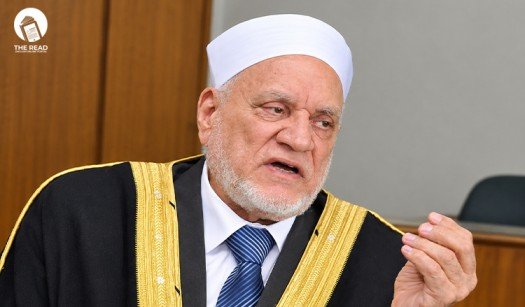
A profile of the Egyptian scholar Ahmad Umar Hashim, exploring his contributions to Hadith scholarship, his association with al-Azhar, his defence of the Prophetic Sunnah, and his enduring scholarly and spiritual legacy.
A year has now passed since the Islamic scholarly world bade farewell to the renowned Egyptian scholar, Shaykh Ahmad Umar Hashim. Blessed with both tradition and the contemporary world, the Shaykh was a celebrated poet and eloquent orator who left an impression on his readers and listeners. He possessed a rare style of address that seemed to reach directly into the soul.
As a professor of Hadith and its sciences at al-Azhar, a member of the Council of Senior Scholars, and former president of al-Azhar University, he occupied an important position in Egypt’s contemporary religious and academic life. His scholarly legacy includes works on hadith methodology, studies of the Prophetic Sunnah, critical editions of classical texts, and commentaries on major hadith collections. The most extensive expression of this legacy is his Fayd al-Bari fi Sharh Sahih al-Bukhari.
His deeply moving ibtihalat-devotional supplications filled with love, humility, and spiritual longing impressed those who listened to them. Egyptians and visitors from different parts of the world often gathered in large numbers at al-Azhar Mosque and the Mosque of al-Husayn, eager to listen to the poetic and melodious Sufi verses that animated such spiritual assemblies. Every Tuesday, more than five hundred students would arrive well before the scheduled time merely to attend his class on Sahih Muslim, held after the 'Asr prayer.
A Concise Life Sketch
Ahmad Umar Hashim was born on 6 February 1941 in Bani Amir, in the Zagazig district of Egypt’s Sharqiyyah Governorate. He entered the primary stage of his education and joined a secondary madrasa in Zagazig, where he completed a four-year course. At that time, he began to master the art of public speaking. His first opportunity came at the age of eleven, when the village headman of a neighbouring village requested his paternal uncle to deliver the Friday khutbah during Ramadan. On that occasion, Ahmad Umar Hashim was asked to speak, and he demonstrated his eloquence and ability from his very first opportunity.
From that point onward, significant turning points began to shape his life. He had aspired to study at the Faculty of Arabic Language (Kulliyyat al-Lughah). His father, however, had a deep desire for his son to pursue the study of Hadith and eventually become an accomplished authority in the field. When he conveyed his own preference to his father, the latter replied, “Even before you were born, I had dedicated you to the path of Allah for the study of Hadith.” At this, he set aside his interest in Arabic literature and, following his father’s wishes, turned towards the study of Hadith. He subsequently gained admission to the Faculty of Usul al-Din (Kulliyyat Usul al-Din).
After graduating from the faculty with distinction, he pursued postgraduate studies specialising in Hadith. His research focused on the contributions of Imam Ahmad ibn Hanbal to the field of Hadith. He later completed his doctoral studies with a dissertation on Hadith in the third century AH. Both of these postgraduate degrees were completed under the supervision of Shaykh Abu Zahw.
Hashim’s intellectual formation was shaped by the scholarly environment of al-Azhar and by his association with leading scholars of hadith, Islamic law, Arabic language, and spirituality. Among the scholars associated with his education were Muhammad Abu Zahw, Abd al-Halim Mahmud, and Yasin al-Fadani al-Makki, who granted him an ijazah in the transmission of hadith. His education combined the academic study of hadith with the inherited practices of reading, transmission, commentary, and public instruction.
The prominent figures among his students were his brother Mahmud Umar Hashim and his close relative Mahmud Abu Hashim, as well as the Qur'anic scholar Ahmad 'Isa al-Ma'sarawi and Muhammad Laban, the renowned Hadith scholar at Cairo University.
Hadith Methodology and Writing
Ahmad Umar Hashim wrote on poetry, Islamic ethics, preaching, biography, and contemporary religious questions. Yet the centre of his scholarly production was Hadith and the Prophetic Sunnah. His works include studies of hadith methodology, introductions to the Sunnah, educational texts, commentaries, and works concerned with the religious and social guidance derived from Prophetic reports.
Some of the important works in hadith scholarship are al-Sunnah al-Nabawiyyah wa-Ulumuha, Qawa'id Usul al-Hadith, al-Muhaddithun fi Misr wa-l-Azhar, Mabahith fi al-Hadith al-Sharif, al-Sunnah al-Nabawiyyah fi Muwajahat al-Tahaddi, Min Huda al-Sunnah al-Nabawiyyah, and al-Shafa'ah fi Daw' al-Kitab wa-l-Sunnah wa-l-Radd 'ala Munkiriha. His wider works include al-Islam wa-l-Shabab, Qisas al-Sunnah, al-Islam wa-Bina' al-Shakhsiyyah, and al-Tadamun fi Muwajahat al-Tahaddiyat.
There are mainly four features in his Hadith scholarship. First, he emphasises the importance of the isnad and the accumulated work of the early specialists. Second, he treats the major canonical collections as products of rigorous scholarly selection rather than ordinary literary compilations. Third, he connects hadith interpretation with the Arabic language, jurisprudence, theology, and the circumstances of transmission. Fourth, he seeks to make technical hadith learning available to students and preachers without separating it from the inherited scholarly tradition. These features should be demonstrated through examples from Qawa'id Usul al-Hadith, al-Sunnah al-Nabawiyyah wa-Ulumuha, and his commentaries.
His works on the Sunnah also serve a defensive purpose. He responds to approaches that reduce the Sunnah to a secondary historical record or claim that the Qur'an can be interpreted independently of Prophetic explanation. For Hashim, the authority of the Sunnah rested not only on individual reports but also on the sciences of transmission, the work of early scholars, and the continuity of scholarly teaching.
Defending the Authority of the Sunnah
Hashim’s academic and public writings defended the authority of the Prophetic Sunnah as a necessary source for Islamic belief, law, ethics, and religious practice. He stood against approaches that reduce the Sunnah to a secondary historical record or claim that the Qur'an can be interpreted independently of Prophetic explanation.
His defence rested on the authority of the hadith tradition, the work of early specialists, the sciences of transmission, and the continuity of scholarly teaching. He presented the canonical collections as the result of sustained critical activity by generations of scholars rather than as unexamined compilations.
Particular attention should be given to his treatment of Sahih al-Bukhari and Sahih Muslim. He regarded both collections as possessing an exceptional position within Sunni Islam and rejected broad claims that their contents could be dismissed without detailed evidence. This position should be distinguished from the more precise question of whether individual reports may be examined through the methods of classical hadith criticism.
Works
He authored nearly a hundred works, making a substantial contribution to the Islamic intellectual tradition. His commentary on Sahih al-Bukhari, entitled Fayd al-Bari fi Sharh Sahih al-Bukhari, is his masterpiece. This encyclopaedic work saw the light of publication only after fourteen years of intensive effort.
At the most recent Cairo International Book Fair, Fayd al-Bari was among the works that recorded the highest sales. The number of volumes varies according to the edition. The official al-Azhar bibliography records fifteen volumes, while a library catalogue records a sixteen-volume Cairo edition. The book also serves as a corrective to anti-Islamic narratives that seek to cast doubt upon Sahih al-Bukhari. In an interview with Al-Ahram, he explained that wherever doubts are raised concerning Sahih al-Bukhari, such claims lack the support of reliable evidence. Responding to the question of whether all Hadith collections are subject to critical revision, he maintained that Sahih al-Bukhari and Sahih Muslim are exempt from such treatment.
Nasamat Imaniyyah is a collection of his poetry. Its verses, flowing with 'ishq and fana', bear the unmistakable imprint of love for the Prophet (PBUH). When the Egyptian Ministry of Awqaf attempted to introduce a system of unified sermons, he expressed his strong opposition. He openly criticised the practice of reading out pre-written khutbahs.
Umar Hashim’s lifelong engagement with Hadith presented the Muslim Ummah with numerous substantial scholarly works, taking the form of critical editions (tahqiq), commentaries (sharh), and sermons (khutab). Among his well-known critical editions of major Hadith works are his tahqiq of al-Suyuti’s Tadrib al-Rawi, published in Beirut, and his critical edition of al-Khatib al-Baghdadi’s al-Kifayah. Al-Islam wa al-Shabab is Umar Hashim’s address to the younger generation. Its pages call upon young people to distance themselves from extremist ideologies and to follow authentic principles of Islam. His al-Muhaddithun fi Misr al-Azhar is an inquiry into al-Azhar’s contribution to the science of Hadith. He also authored a work containing a collection of short stories derived from the sayings of the Prophet (PBUH).
During the period when Umar Hashim served as president of al-Azhar from 1995 to 2003, the Syrian novelist Haidar published Walimat li-A'shab al-Bahr, a novel that portrayed Islam in a distorted manner. Its central themes were religious rejection and denial of God. So, he remained firm in the decision to ban its publication. It was a highly controversial decision that generated considerable debate. Despite the controversy surrounding it, he stood by his position in defence of Islam and implemented the decision despite various pressures.
His position regarding the Baha'is also attracted considerable attention. He held that those who adopted such beliefs should be punished. One of the more distressing and unusual incidents of his public life occurred when false reports of his death circulated on social media and were subsequently reported by some media outlets without verifying the facts. He later recounted emotionally how his sister broke down in tears after seeing the reports.
Ahmad Umar Hashim opposed political violence and the misuse of religious language. In a 2014 interview, he condemned violence associated with the Muslim Brotherhood and called for repentance, reconciliation, and social peace. In 2016, he reportedly supported conditional dialogue with imprisoned Brotherhood members, provided that they renounced extremist ideas; days later, however, he denied calling for reconciliation, describing the report as “pure fabrication.” These statements indicate that he distinguished between scholarly engagement and unconditional political reconciliation. His al-Wasatiyyah fi al-Islam reflects his broader opposition to extremism and advocacy of balanced religious discourse.
He also maintained a close relationship with Abdel Fattah el-Sisi, the President of Egypt, and videos are available of him praising Sisi at public gatherings. One particularly notable scene shows Sisi kissing Ahmad Umar Hashim’s head during a Mawlid gathering.




Comments